2026 Best Azul Macaubas Quartzite for Global Buyers
In 2026, global buyers are looking beyond dramatic color when selecting Azul Macaubas Quartzite. They want verified quality, stable supply, and clear technical information. This stone remains highly valued for its electric blue veins, smoky gray movement, and naturally varied background. Each slab is different. That is the attraction, and sometimes the difficulty.
Experienced buyers should inspect full slabs, not rely only on small samples. A showroom sample may hide open fissures, resin repairs, or unusual color shifts. Ask suppliers for quarry origin, thickness, finishing details, water-absorption data, and recent inspection photographs. A reliable exporter should also explain packing methods, container protection, and replacement procedures. These details matter when slabs travel thousands of miles.
Russ Beane, a senior technical expert associated with the Natural Stone Institute, has offered a useful reminder: “Natural stone is a product of nature, and each piece is unique.” That principle defines Azul Macaubas Quartzite purchasing. Vein direction can change across one bundle. Some slabs may suit a waterfall island, while others work better as wall panels or bookmatched features. Fabrication also requires experienced technicians, diamond tooling, and careful edge support.
There is no flawless promise. Even premium material can contain natural movement. Buyers should accept that reality, but not accept unclear documentation. A thoughtful 2026 selection balances visual drama, structural performance, ethical sourcing, and practical installation planning. The best choice may not be the brightest slab. It may be the most honestly represented one.
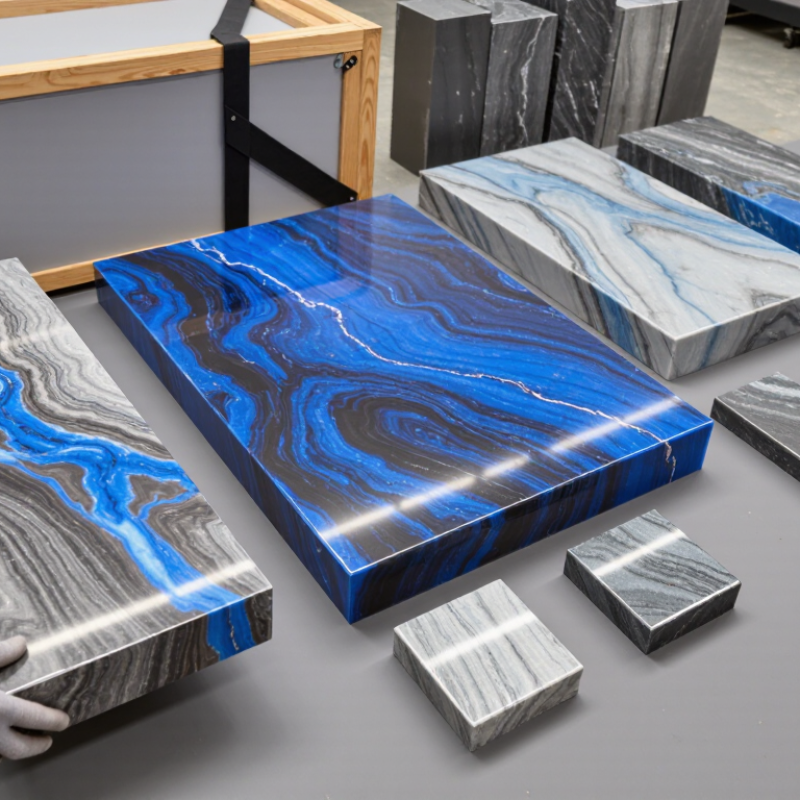
Azul Macaubas Quartzite: Origin, Geology, and Distinctive Features
Azul Macaubas Quartzite: Origin, Geology, and Distinctive Features
Azul Macaubas quartzite is quarried in Brazil, especially within mineral-rich regions of Bahia. Its story begins with ancient sandstone deposits. Heat, pressure, and tectonic movement transformed those sediments into dense quartzite over geological time. Recrystallized quartz forms the stone’s strong framework. Other minerals create its cool blue, gray, and white movement.
The surface often shows flowing bands, cloud-like patches, and sharp white veining. Some slabs display deep ocean blue, while others appear softer and more silvery. No two blocks behave exactly alike. This variation gives large kitchen islands a natural, almost painted appearance. In direct light, mica and mineral grains may produce a subtle shimmer. The effect can change noticeably between polished and honed finishes.
When I assess a slab, I inspect its veining, edges, fissures, and back surface. I also compare several slabs before approving a layout. A dramatic sample may not represent the full block. That detail is easy to miss. Quartzite is generally hard and suitable for demanding interiors, but fabrication still requires skilled cutting and support. Fabricators should confirm water absorption and recommend sealing based on testing. My checklist is not perfect, either. A small hidden fissure can become important after installation. Careful inspection remains essential for global buyers seeking consistent color, structural confidence, and realistic expectations.
Key Color Patterns, Veining Styles, and Natural Variations
2026 Best Azul Macaubas Quartzite for Global Buyers
Key Color Patterns, Veining Styles, and Natural Variations
Azul Macaubas quartzite is recognized for blue backgrounds ranging from soft sky tones to deep ocean shades. White veining often crosses the surface in narrow, flowing lines. Some slabs show gray clouds, while others contain subtle gold or warm brown accents. These colors may appear stronger after polishing and under direct lighting.
Veining can be linear, wavy, or dramatically layered. A bookmatched pair may create a striking mirror effect across a wall or island. However, the pattern is never perfectly predictable. Quarry blocks can change noticeably, even within the same shipment. Some areas may include small mineral clusters, open-looking fissures, or uneven color movement. These are natural features, not automatic defects.
Experienced buyers should request full-slab photographs, not only small samples. Ask for images in daylight and indoor lighting. A wet reference image can also reveal the stone’s deeper color and movement. Review the slab edges for repairs or filled fissures before fabrication. For larger projects, an independent stone inspection or petrographic report adds useful confidence. I have found that digital images sometimes exaggerate blue tones. Physical approval remains wiser. Even careful selection cannot remove every surprise, and that limitation deserves honest planning.
How to Evaluate Azul Macaubas Quartzite Quality and Authenticity
How to Evaluate Azul Macaubas Quartzite Quality and Authenticity
Azul Macaubas quartzite should show natural blue movement, crisp mineral variation, and a solid crystalline structure. Color alone proves little. Some slabs look impressive under showroom lighting but appear dull beside a window. Inspect the full surface in daylight. Check whether the veining continues naturally across the slab or repeats like printed decoration.
Run your hand across the polished face. Quality material should feel even, without soft patches, open pits, or excessive resin-filled areas. Ask for the quarry location, extraction date, slab photographs, and independent test results. Water absorption, density, abrasion resistance, and flexural strength are useful indicators. A simple lemon or oil test may reveal surface sensitivity, but laboratory testing remains more reliable.
Authenticity deserves extra care. Dense quartzite should resist a steel scratch test, although this field check is not conclusive. A professional stone laboratory can examine mineral composition and distinguish quartzite from softer look-alike materials. Review the slab edges too. Artificial coloring may appear stronger near cut sections, while resin can create unusually glossy patches. I have learned that one attractive sample can misrepresent an entire bundle. Ask to inspect several slabs from the same lot. Small differences are natural; dramatic differences require explanation. Some suppliers provide incomplete paperwork, and that should slow the purchase, not end it automatically. Compare documents, physical evidence, and test data before approving fabrication.
Best Applications for Residential and Commercial Design Projects
Azul Macaubas quartzite suits projects that need visual movement without artificial repetition. Its blue veining can anchor a kitchen island, reception desk, bathroom vanity, or hotel lobby wall. The U.S. Geological Survey reported that crushed and dimension stone remained a major U.S. construction material category in 2023, confirming stone’s continuing role in built environments. Yet selection must begin with the slab, not a small sample. Veins can shift sharply between slabs.
In residential kitchens, use bookmatched slabs on islands or full-height backsplashes. The effect resembles flowing water under daylight. Test the stone for staining, absorption, and hairline fractures before fabrication. A penetrating sealer can support maintenance, but it does not make the surface indestructible. Avoid unsupported overhangs. Steel reinforcement may be necessary.
Commercial designers can specify Azul Macaubas for reception counters, feature walls, elevator surrounds, and low-traffic floors. The National Kitchen and Bath Association’s 2024 design research continues to show strong demand for durable, natural-looking surfaces in renovation projects. For public floors, confirm slip resistance and local accessibility requirements. For façades, engineers must verify anchoring, panel thickness, wind loads, and freeze-thaw performance. I would not place it in every high-traffic zone. The color is memorable, but replacement matching may be difficult. Natural stone rewards restraint.
Global Buying Guide: Pricing, Sourcing, Shipping, and Care
2026 Best Azul Macaubas Quartzite for Global Buyers
Global Buying Guide: Pricing, Sourcing, Shipping, and Care
Azul Macaubas quartzite is valued for blue movement, pale veining, and strong daily performance. Pricing varies by origin, slab size, thickness, finish, and color consistency. Export quotes may range widely, so compare complete offers rather than stone prices alone. Ask for recent quarry images, slab photos, test reports, and the exact number of available slabs. A small sample helps, but it cannot show every natural change. That limitation matters.
Experienced buyers request written details for dimensions, tolerances, surface finish, packing, and replacement terms. Confirm whether the price includes cutting, crating, port handling, insurance, and customs documentation. Container shipping usually lowers unit costs for larger orders, but it increases storage pressure. Use reinforced A-frame crates, edge protection, moisture-resistant wrapping, and clear slab labels. Check the packing list before departure. Damage can still happen.
Care is practical. Seal the surface according to the fabricator’s recommendation, then reseal when water absorbs quickly. Clean spills with a pH-neutral cleaner and a soft cloth. Avoid strong acids, abrasive powders, and sudden thermal shock. Wipe wine, oil, and citrus promptly. A hot pan may not damage sound quartzite, but a trivet is wiser. Inspect every slab before installation, because lighting can hide hairline flaws. I have seen attractive photographs create unrealistic expectations; physical inspection remains the more reliable choice.
2026 Best Azul Macaubas Quartzite for Global Buyers
Indicative landed-cost benchmark for one square metre of 20 mm polished Azul Macaubas quartzite, shown in USD. Actual prices vary by slab grade, origin, order volume, exchange rates, port, and destination.
Buying guide: Material and fabrication usually represent the largest cost components. Buyers should confirm slab selection, thickness, finish, packaging, export documentation, insurance, and inland delivery before comparing quotations. Use a neutral-pH stone cleaner, avoid abrasive products, and reseal the surface according to the fabricator’s recommendation.