10 Best Smart Speakers to Buy in 2026?
A Smart Speaker can be a kitchen timer, a music player, and a hands-free way to manage compatible devices. But the best choice is not always the one with the fullest feature list. Sound quality, voice recognition, privacy controls, and compatibility can matter more in daily use.
Dave Limp, Amazon’s former devices chief, has described voice as “the most natural user interface.” That idea helps explain the appeal, though voice control is not always effortless. A running tap, a distant microphone, or an unfamiliar command can disrupt the experience. Small annoyances count.
This guide to the 10 best Smart Speakers to buy in 2026 compares practical strengths rather than chasing specifications alone. We look at listening quality, assistant support, setup, connectivity, and how clearly each model explains its privacy settings. We also consider where a speaker might fit: beside a coffee maker, on a crowded desk, or in a living room where several people share it. These details can change which product feels right.
No single model suits every home. Some shoppers may value strong stereo sound; others may want an affordable speaker that answers reliably from across the room. The picks ahead aim to make those trade-offs easier to see. A little uncertainty remains—voice assistants and features can change after purchase. That deserves attention, too.
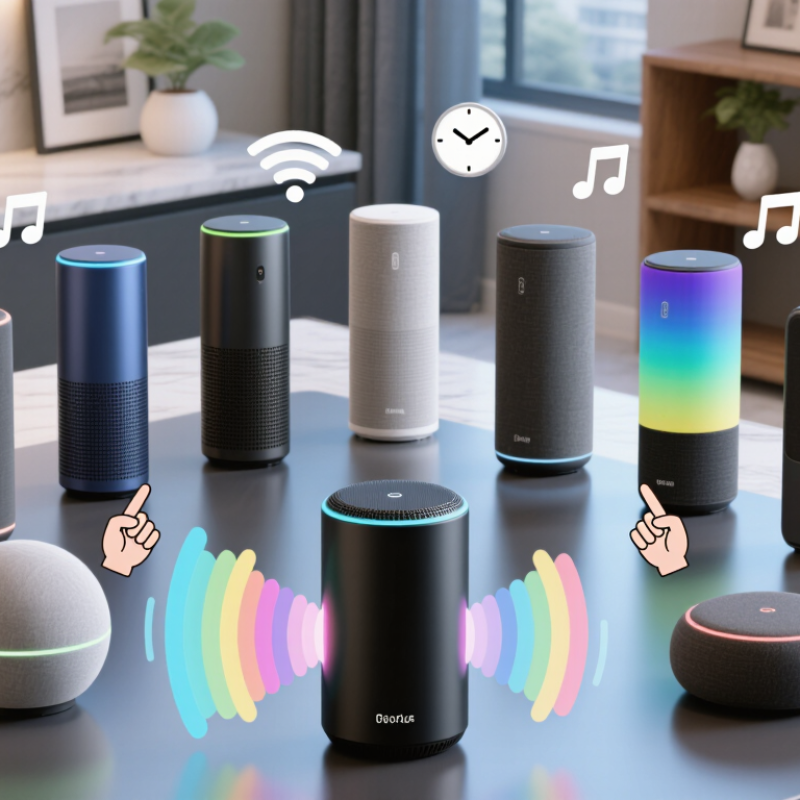
What Makes a Smart Speaker a Strong Choice in 2026?
A strong smart speaker in 2026 should make ordinary tasks easier, not turn a room into a control panel. It should understand clear requests from a few feet away, even while a kettle boils or a fan runs. Try asking for a timer, then changing it; reliable follow-up matters more than a long feature list. Setup should be manageable, with clear controls for muting the microphone, adjusting data settings, and connecting devices. Privacy options should be easy to find, not buried behind several menus. Small details matter.
Sound quality depends on the room and the speaker’s size. Check whether speech stays clear at low volume, and whether music sounds balanced near a wall or on a kitchen counter. A compact speaker may suit a bedside table, while a larger room may need stronger coverage. Compatibility deserves equal attention: confirm it works with your phone, home network, and existing devices before buying. Check how long software support is expected to continue, too. A responsive assistant is useful; one that guesses wrong can become irritating fast. No speaker handles every accent or noisy room perfectly. Leave room for that. The best choice fits your routines, offers dependable controls, and feels simple after the novelty fades.
Which Features Matter Most When Comparing Smart Speakers?
When comparing smart speakers, begin with the room, not the feature list. A kitchen speaker needs clear speech over running water; a bedside model should respond quietly and reliably. Microphone sensitivity, volume control, and sound balance matter more than impressive specifications on paper. Sound matters. Check whether voice commands work from across the room, and whether playback stays clear at low volume.
Privacy and compatibility deserve equal attention. Pew Research Center reported in 2023 that 67% of U.S. adults understood little or nothing about how companies use their personal data. Look for a physical microphone mute, clear data controls, and straightforward options for deleting voice recordings. Then check support for the devices and connection standards already in your home. A smart speaker can sound excellent and still frustrate you if it cannot reliably control your lights or thermostat.
Edison Research’s 2024 Infinite Dial found that 35% of Americans aged 12 and older owned a smart speaker. That broad adoption makes setup, accessibility, and dependable updates practical buying criteria, not extras. One caveat: ownership figures do not show how often people use their speakers. I would test everyday tasks, such as setting a timer from another room, before judging a model by its feature count. A few clumsy voice responses can matter more than a long list of clever functions.
The 10 Best Smart Speakers to Buy in 2026
The best smart speakers to buy in 2026 should fit real rooms, routines, and budgets—not just promise clever voice control. A useful top ten includes compact speakers for bedside tables, larger models for music, screen-equipped options for kitchen timers, and portable designs for patios. It should also include speakers with strong privacy controls, accessible voice features, easy multiroom setup, and broad smart-home compatibility. Small details matter. A microphone mute button should be easy to find, and spoken commands should work over a running tap or a little background noise.
Sound deserves a careful listen. Clear voices help with podcasts, while fuller bass suits music in a living room. Yet the biggest speaker is not automatically the best choice; a small room can make heavy bass feel boomy. Check whether the speaker needs a constant power connection, which services it supports, and whether household members can use separate voice profiles. Read the privacy settings before connecting calendars or other personal accounts. One annoyance remains: voice recognition can stumble on unusual names, even in otherwise capable devices.
For a balanced 2026 shortlist, compare setup time, response accuracy, repair or software support, and the cost of adding more speakers. A display may be useful while cooking, but unnecessary beside a bed. Try the controls in the room where the device will live, if possible. A quiet showroom can mislead. The right pick is the one that stays convenient after the novelty wears off.
How the Top Models Differ in Sound, Assistants, and Connectivity
A smart speaker’s best feature depends on the room, not the spec sheet. In a kitchen, clear speech and quick volume controls may matter more than deep bass. In a living room, a larger driver can make music feel fuller, but placement still changes what you hear. Small speakers often struggle with low notes. Listen at ordinary volume, not just showroom levels.
Assistant quality is harder to compare than sound. Check whether the speaker understands your usual phrasing, handles timers reliably, and works with the services you already use. Edison Research’s 2024 Infinite Dial report found that about 35% of Americans aged 12 and older owned a smart speaker. That broad audience makes dependable everyday tasks as important as clever voice features. Still, recognition can falter with background noise.
Connectivity deserves equal attention. Look for stable Wi-Fi, Bluetooth playback, and clear details about multi-room audio or device compatibility. The Bluetooth SIG’s 2024 Market Update projected annual Bluetooth device shipments would reach 7.1 billion by 2028; that figure covers many device types, not speakers alone. Read the fine print. A model may support a connection standard yet lack a feature you expect. The “best” pick can be a little less obvious than its rating suggests.
How to Choose a Smart Speaker for Your Home and Budget
Choosing a smart speaker starts with the room, not the feature list. A compact model may suit a bedside table, while a larger kitchen needs clearer sound over running water. Listen at the volume you actually use. Louder is not always better. Check whether speech remains easy to understand across the room, especially during music playback.
Next, consider what you already own. The speaker should work smoothly with your phone, home network, and any smart devices you plan to control. Compatibility can be less seamless than product pages suggest, so verify supported connections before buying. Think about daily tasks, too: timers, reminders, weather, and hands-free calls may matter more than a long list of clever extras. Keep it simple.
Set a firm budget, including any optional subscription costs. A lower-priced speaker can be a sensible choice if you mainly want voice control and background music. For a shared home, review microphone mute controls, privacy settings, and whether voice recordings can be managed or deleted. Try the controls yourself if possible. Buttons should feel clear, and setup should not require repeated troubleshooting. I still find that advertised sound quality is hard to judge from specifications alone. A return window can help if the speaker feels harsh or misses your voice from the sofa.
10 Best Smart Speakers to Buy in 2026? — How to Choose for Your Home and Budget
A practical starting point: compare typical U.S. price bands before weighing sound quality, room size, and the features you need.
Price bands are approximate planning ranges, not market averages. Actual prices vary by retailer, sales, and speaker features. Choose a budget first, then consider room size, audio needs, voice-control features, and compatibility with your home devices.