China Best Thermal Break Windows for Global Buyers?
For global buyers, choosing the “best” Thermal Break window is not a simple matter of comparing prices or frame colors. Climate, glass specification, drainage design, and installation quality can change real performance. A window that performs well in a cold Canadian winter may need different glazing and ventilation considerations in a humid Southeast Asian city. The frame is only one part of the system.
Building-science expert Dr. Joseph Lstiburek explains, “A thermal bridge is a location in the building envelope where heat flows more easily than through adjacent areas.” This principle helps buyers examine aluminum profiles, polyamide strips, corner joints, and sash connections more carefully. Reliable suppliers should provide thermal transmittance data, air-tightness results, water-tightness testing, and installation guidance. Look for documented values, not broad claims such as “energy saving” or “premium insulation.” Ask whether testing follows recognized regional standards, because certification requirements differ across markets.
Details matter.
A well-designed Thermal Break window should reduce interior condensation risks, limit heat transfer, and support stable indoor comfort. However, no window is perfect. Glass selection, wall interfaces, shading, and workmanship can weaken an excellent profile. Our assumptions can fail when site conditions differ from laboratory testing. Global buyers should therefore compare complete systems, request technical drawings, inspect sample sections, and confirm after-sales support before ordering. The strongest choice is not always the most expensive one. It is the system with transparent evidence, suitable engineering, and dependable performance in the project’s actual climate.
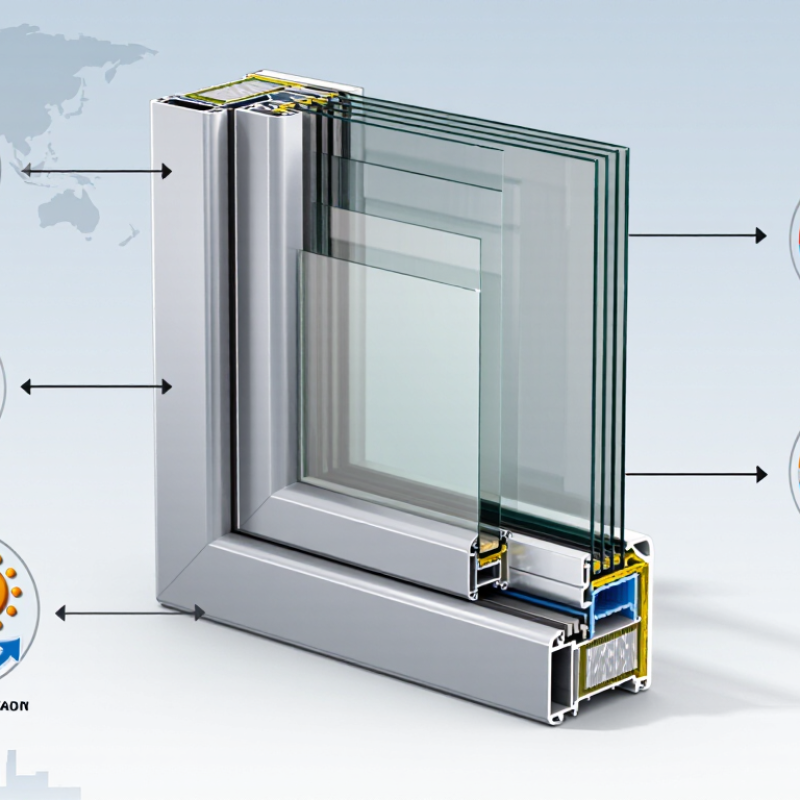
What Are Thermal Break Windows and How Do They Work?
China Best Thermal Break Windows for Global Buyers?
Thermal break windows use a non-conductive strip inside an aluminum frame. This strip separates the hot exterior metal from the cooler interior metal. It interrupts heat flow through the frame. Usually, reinforced polyamide is used for this separation. The frame works with insulated glass, low-emissivity coatings, seals, and drainage channels. It is not simply “an aluminum window with plastic inside.”
The U.S. Department of Energy reports that windows can cause 25–30% of residential heating and cooling energy use. The International Energy Agency’s 2023 buildings report also states that buildings consume about 30% of global final energy. These figures explain why frame design deserves serious attention. A warmer interior frame can reduce condensation near corners and handles. It can also improve comfort beside large glass panels. Small details matter.
Global buyers should request tested U-values, air-leakage results, water-resistance data, and thermal-bridge calculations. NFRC procedures show why whole-window performance matters, rather than glass data alone. Installation is equally important. An excellent profile can fail beside a poorly sealed sill. That is the uncomfortable part. Thermal breaks reduce conduction, but they cannot correct weak drainage, incorrect glass spacing, or careless installation. Product samples should include corner joints, gaskets, and hardware—not only a polished frame section.
Why China Is a Major Source of Thermal Break Windows
China Best Thermal Break Windows for Global Buyers?
China is a major source of thermal break windows because its supply chain combines aluminum extrusion, insulating strips, glass processing, and hardware assembly. This concentration can shorten lead times and support custom sizes. The International Energy Agency reports that buildings consume about 30% of global final energy. They also create roughly 26% of energy-related emissions. These figures make thermal performance a practical purchasing issue, not only a design preference.
Reliable buyers should examine tested U-values, air leakage, water tightness, and wind resistance. Standards such as EN 14351-1 and ISO 10077-1 help compare technical claims. A competent factory should provide test reports, profile drawings, glass specifications, and batch inspection records. On a project site, details matter: continuous insulation strips, sealed corner joints, drainage paths, and correct frame installation can affect real performance. China’s manufacturing scale supports these requirements, but quality is not automatic. Specification drift remains a risk.
The lowest quotation may hide thinner profiles or weaker seals. I have seen attractive samples fail because installation details were ignored. That is an uncomfortable lesson. Global buyers should assess the complete window system, not the frame alone. The UNEP Global Status Report for Buildings and Construction also highlights the sector’s continuing energy burden, reinforcing the need for measurable efficiency. Pricing matters, but verified performance matters longer.
China Best Thermal Break Windows for Global Buyers? - Why China Is a Major Source of Thermal Break Windows
The chart compares indicative frame Uf values for common window-frame systems. Lower values indicate better thermal insulation. Thermally broken aluminum frames typically provide substantially better insulation than conventional aluminum while retaining aluminum’s strength, slim sightlines, durability, and design flexibility. These performance characteristics help explain why China is a major sourcing base for thermal break windows, offering large-scale manufacturing, broad profile options, and export-oriented production.
Indicative midpoint values based on commonly published industry ranges and thermal-transmittance calculation practices referenced by EN ISO 10077. Actual performance depends on profile geometry, polyamide strip design, glazing, hardware, fabrication quality, and installation.
Key Materials, Designs, and Performance Standards
China Best Thermal Break Windows for Global Buyers?
Thermal break windows begin with the materials hidden inside the frame. Polyamide strips separate exterior and interior aluminum sections, reducing heat transfer through the metal. Reinforced polyamide usually offers better stiffness than basic plastic. Low-E glass, argon filling, and warm-edge spacers can further improve insulation. However, poor sealing can weaken an otherwise strong specification.
Design decisions should match the project climate. A triple-glazed unit may suit cold regions, but it can add weight and cost. In hot climates, solar-control glass may matter more than extra panes. Casement windows often provide tighter compression seals than sliding systems. Yet hardware quality, drainage paths, and frame corners deserve equal attention. Site inspections often find small gaps around installation joints.
Performance claims need independent evidence. Buyers should request tested U-values, air permeability, water tightness, and wind resistance. EN 14351-1 supports European product assessment, while NFRC methods are common in North America. These systems are not interchangeable without checking test conditions. Ask for reports showing the complete window, not only the frame. Factory testing helps, but installation can change results. I have seen excellent specifications perform poorly after rushed fitting. That uncomfortable detail is easy to overlook.
Ordering, Compliance, Installation, and Long-Term Maintenance Considerations
China Best Thermal Break Windows for Global Buyers?
Ordering thermal break windows from China requires more than comparing unit prices. Request detailed drawings, material grades, glass specifications, and tested U-values before approving production. Confirm whether measurements use metric or imperial units. A small conversion error can affect the entire façade.
Compliance depends on the destination market. Ask for current test reports covering air leakage, water resistance, wind pressure, thermal performance, and safety glazing. Local authorities may require additional certificates, even when factory documents look complete. Check labels, fire requirements, and energy rules with a qualified local professional. A perfect quotation can still hide missing evidence.
Installation determines much of the final performance. Provide accurate opening sizes, fixing details, drainage paths, and acceptable tolerances. Keep frames level and plumb. Use compatible membranes, sealants, and insulation around the perimeter. Poor sealing can create condensation beside a high-performance frame. That is easy to overlook.
Tips: Approve one physical sample first. Photograph packaging, frame corners, glass markings, and delivered accessories. Store units vertically in a dry, shaded area. During maintenance, inspect gaskets, drainage holes, hardware, and sealant twice yearly. Replace worn parts with compatible materials, not improvised substitutes. In practice, schedules change, and some details may be missed. A written inspection record helps reveal those weak points early.