What are the Key Trends in the Tamper Evident Label Market?
The Tamper Evident Label Market is witnessing significant changes. Industry expert Sarah Thompson, a leading analyst at Packaging Insights, emphasizes, "The demand for tamper evident solutions continues to grow alongside consumer safety standards." This statement highlights the urgent need for secure packaging in various sectors.
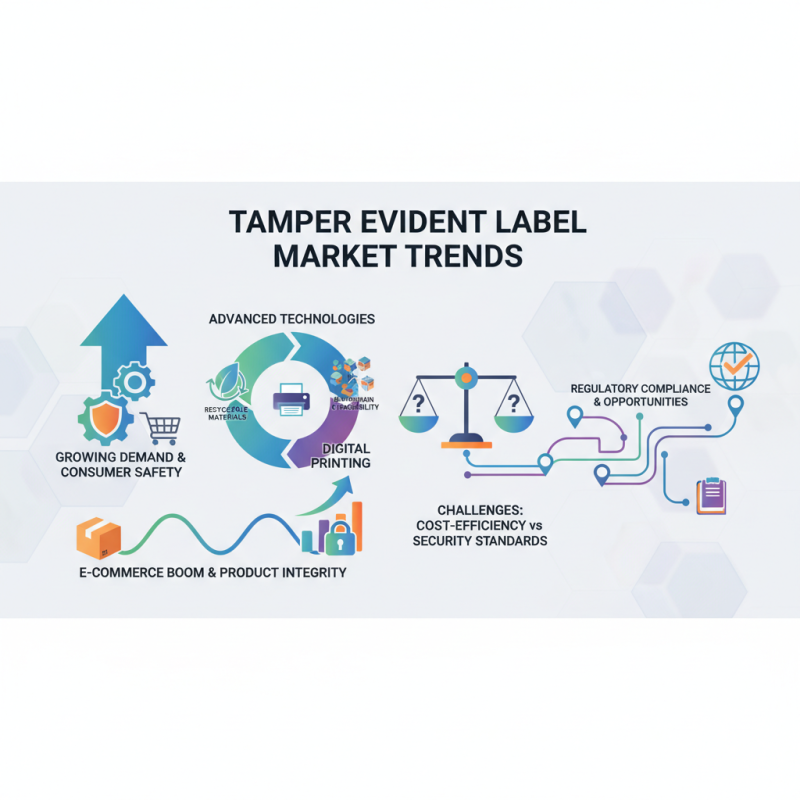
As consumers become more aware of product safety, companies are investing in advanced labeling technologies. The market is evolving to meet these expectations. Innovations such as recyclable materials and digital printing are emerging. However, challenges remain in maintaining cost-efficiency while ensuring high-security standards.
The rise of e-commerce further drives the need for reliable tamper evident labels. Businesses must adapt to increasing online transactions and consumer concerns about product integrity. Despite the growth potential, some organizations struggle to keep pace with regulatory requirements. The Tamper Evident Label Market offers opportunities and obstacles. It is crucial for companies to navigate these dynamics effectively.
Current Market Overview of Tamper Evident Labels
Tamper evident labels serve as a crucial line of defense in product protection. These seals indicate tampering, thus ensuring product integrity and consumer safety. The global tamper evident label market is projected to grow significantly, with a value increase expected to reach approximately USD 5 billion by 2028. This growth is fueled by rising consumer awareness around food safety and regulations that mandate secure packaging.
Current trends show an increased focus on sustainable materials in the production of tamper evident labels. More companies are opting for biodegradable or recyclable options to appeal to environmentally conscious consumers. Additionally, the pharmaceutical industry remains a primary driver of demand. A report by Research and Markets noted that nearly 37% of tamper evident label sales come from pharmaceuticals.
Tip: When choosing tamper evident solutions, prioritize labels with visibility features. Clear indicators are crucial for immediate recognition of tampering.
Despite the positive outlook, challenges persist. The label's effectiveness may diminish if not applied correctly. Misalignments can create vulnerabilities, compromising the intended protection. Further, the rise of innovative packaging technologies could impact traditional label usage.
Tip: Regularly review label application systems to ensure reliability. An investment in training can prevent costly errors.
Key Drivers Influencing the Tamper Evident Label Market
The tamper evident label market is experiencing significant growth, driven by various key factors. One major driver is the increasing consumer awareness regarding product safety. Today, consumers demand transparency. They want reassurance that the products they purchase are safe and intact. Tamper evident labels address this concern effectively.
Another influential factor is the stringent regulatory environment in multiple industries. Regulations require companies to ensure product integrity. This compliance imperative pushes manufacturers to adopt tamper evident solutions. As a result, many industries—from pharmaceuticals to food—embrace these labels. The need for accountability in product manufacturing further enhances their demand.
Additionally, advancements in technology play a crucial role. Innovations in printing and materials lead to better tamper evident solutions. These improvements enhance effectiveness and durability. However, companies must continuously assess their label technologies. Not all solutions are fail-proof. Periodic reviews will ensure labels remain relevant and effective in combating tampering.
Emerging Technologies in Tamper Evident Label Production
Emerging technologies in tamper evident label production are shaping the future of packaging security. Advanced printing techniques, such as digital and flexographic printing, are enhancing label customization. This customization allows companies to create unique designs, improving brand recognition. According to a recent report, the global tamper evident label market is projected to grow at a CAGR of 6.1% from 2022 to 2030.
Additionally, the integration of smart technology into labels is on the rise. NFC (Near Field Communication) and QR codes embedded in labels provide real-time information. Consumers can simply scan the label for product authenticity. This trend reflects a broader shift towards transparency and trust in product sourcing. Some manufacturers are even experimenting with biodegradable materials, which adds an eco-friendly aspect to their products.
While the advancements are promising, challenges remain. The cost of new technologies can be prohibitive for smaller companies. Moreover, the increased complexity in the supply chain can create potential vulnerabilities. The industry must address these challenges to fully leverage technological improvements. Investing in emerging technologies holds great potential, but companies must also be aware of the obstacles along the way.
Key Trends in the Tamper Evident Label Market (2023)
In the Tamper Evident Label Market, emerging technologies have shown significant trends in 2023. Digital printing leads with the highest market interest, followed by sustainable materials and RFID integration. Customization and enhanced security features are also gaining attention, reflecting a growing demand for innovative solutions in label production.
Consumer Awareness and Demand Trends for Tamper Evident Labels
The demand for tamper evident labels is on the rise. This trend is driven by consumers who prioritize safety and transparency. As awareness grows, customers are more likely to choose products with secure packaging. They want to feel confident in the integrity of what they purchase. Tamper evident labels provide that reassurance. Their presence often influences buying decisions.
Consumers are increasingly educated about product safety. They actively seek out labels that show proof of tampering. This heightened awareness leads to discussions about label effectiveness. People question how well these labels protect against contamination. Some may even challenge their reliability. Companies must respond to this demand with high-quality solutions.
In many industries, the need for visible protection is paramount. Food and pharmaceuticals often lead in requiring tamper evident features. This creates pressure on manufacturers to innovate and maintain standards. However, not all solutions are seamless. Some labels can be difficult to apply or remove. This presents challenges for both consumers and producers. Balancing effectiveness with user experience remains an ongoing task.
Key Trends in the Tamper Evident Label Market
| Trend | Description | Impact | Market Growth (%) |
| Increased Consumer Awareness | Consumers are becoming more aware of product safety and tampering. | Higher demand for tamper evident labels. | 8% |
| Regulatory Compliance | Stricter government regulations on product packaging. | Increased usage in various industries. | 10% |
| Technological Advancements | Innovations in materials and printing technology. | Enhanced functionality and aesthetics. | 12% |
| Sustainability Trends | Demand for eco-friendly materials and processes. | Attracting environmentally conscious consumers. | 9% |
| Rise in E-commerce | Growth of online sales leading to enhanced packaging needs. | Increased focus on product security during shipping. | 15% |
Regulatory Impacts on the Tamper Evident Label Industry
The tamper evident label market is shaped significantly by regulatory impacts. Governments worldwide impose strict guidelines on product packaging, especially in the food and pharmaceutical sectors. These regulations ensure consumer safety, driving companies to adopt enhanced labeling solutions.
Compliance with these regulations often requires innovation. Companies invest in advanced materials and technologies to meet stringent standards. For instance, labels must not only deter tampering but also provide clear indicators of any breaches. These challenges push manufacturers to continually adapt, raising both concerns and opportunities within the industry.
However, navigating regulatory landscapes can be complex. Companies may struggle with understanding new requirements or implementing compliant solutions fully. This inconsistency in compliance can lead to market fluctuations. Balancing regulatory demands with cost-effective production remains an ongoing challenge for many players in the tamper evident label market.