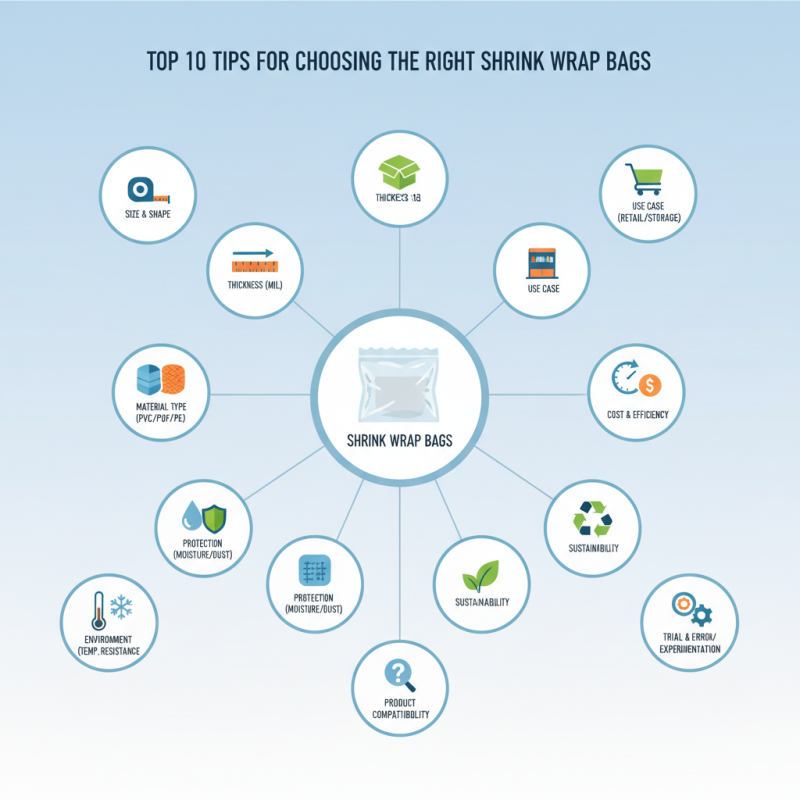
Top 10 Tips for Choosing the Right Shrink Wrap Bags?
Choosing the right Shrink Wrap Bags is essential for effective packaging and protection. These bags play a vital role in preserving products, ensuring they remain intact during storage and transport. With so many options available, making the right choice can be overwhelming.
Factors such as size, thickness, and material all come into play. Each product has unique requirements, so understanding those needs is key. For example, products that require airtight conditions may demand different bags than items meant for retail display.
While there are many expert recommendations, not every bag will suit your situation perfectly. It’s crucial to reflect on your specific use case. Remember, trial and error might be necessary to find the ideal fit for your packaging needs. Proper selection of shrink wrap bags can save time, money, and headaches down the road.
Understanding the Different Types of Shrink Wrap Bags Available
When considering shrink wrap bags, understanding the types available is crucial. Different applications require specific types of shrink wrap. For instance, centerfold bags provide versatility, while single-wound bags deliver tighter seals for irregularly shaped items. Each type has unique strengths that affect product presentation and protection.
Polyolefin shrink wrap bags are popular for food packaging due to their clarity and strength. However, PVC bags may emit odors and aren't suitable for all products. It’s essential to consider the environment where your products will be stored. Some materials may degrade under UV light or humidity, which can impact product integrity.
Moreover, evaluating the thickness of the material is key. Thicker bags offer better durability, while thinner options can be more economical. Reflecting on your specific needs can guide your choice.
How will the bag be used? Will it hold up during shipping? Each decision matters in ensuring the quality of your packaging. Adjust your choices based on feedback and experiences. This process is not always straightforward, but it is vital for achieving optimal results.
Evaluating the Size and Dimensions for Your Shrink Wrap Needs
Choosing the right shrink wrap bags involves careful consideration of size and dimensions. It's essential to measure your products accurately before making a selection. If your items are too large or too small for the bags, you will face issues during packaging. Think about the width, length, and height of your products. This will help ensure that the bags fit snugly and securely.
Also, consider the nature of what you’re wrapping. Is it a fragile item or something robust? Fragile items may require tighter wrapping to avoid movement and damage. For bulkier products, you might need oversized bags that provide extra room. Reflecting on these details will lead to a better decision.
Don’t forget to account for any additional features, like handle holes or special closures. These can affect your choice significantly. As you evaluate your options, it’s wise to test a few sizes before committing to a larger order. This trial-and-error process may lead to surprising insights about your packaging needs.
Top 10 Tips for Choosing the Right Shrink Wrap Bags | Tip Number | Tip Description | Recommended Size (in inches) | Ideal Uses |
| 1 | Determine the product dimensions accurately. | 12 x 12 | Small items like crafts, food items. |
| 2 | Consider the thickness of the bags. | 15 x 20 | Medium-sized products, electronics. |
| 3 | Select the right shrink temperature for your needs. | 9 x 13 | Gifts, seasonal items. |
| 4 | Choose a suitable type of material (PVC, Polyolefin). | 18 x 24 | Fragile items, collectibles. |
| 5 | Evaluate if additional sealing is necessary. | 24 x 36 | Large products, bulk items. |
| 6 | Check the moisture barrier properties. | 10 x 15 | Food packaging. |
| 7 | Assess clarity and strength of the wrap. | 20 x 30 | Presentation of items. |
| 8 | Look for eco-friendly materials if necessary. | 8 x 10 | Organic products, gifts. |
| 9 | Consider the aesthetic finish you desire. | 14 x 14 | Luxury items. |
| 10 | Finalize based on usability and convenience. | 16 x 22 | Everyday items, retail. |
Assessing the Thickness and Material Quality for Durability
When choosing shrink wrap bags, assessing thickness and material quality is essential for durability. According to industry reports, the thickness of shrink wrap typically ranges from 60 to 120 microns. A thicker bag often offers increased strength and protection, which can be crucial for shipping and storing items. However, thicker doesn't always mean better. It may lead to increased costs and may not be necessary for lighter items.
Material quality is another vital factor. Shrink wrap can be made from PVC, PE, or polyolefin. For instance, polyolefin offers superior clarity and resistance to punctures or tears. Reports show that bags made from polyolefin can endure temperatures up to 400°F. This is ideal for heat-sensitive products. On the other hand, PVC is less flexible and can crack under extreme temperatures.
Choosing the right combination of thickness and material involves understanding the product being packaged. Consider the environmental conditions it will face during transport and storage. A mismatch can lead to product damage. It’s worth investing the time to request samples and test usability. Frequent testing and feedback from users can reveal nuances in performance that raw specifications might miss.
Considering Heat Sources for Effective Shrink Wrapping
When choosing shrink wrap bags, the heat source is crucial for effective wrapping. Different products demand various methods for optimal results. According to industry reports, manufacturers note that using a proper heat source increases efficiency by up to 30%. Understanding these heat sources can directly affect the outcome of your shrink wrapping process.
Electric heat guns are popular due to their versatility. They allow for precise control over heat levels, which helps prevent product damage. In contrast, heat shrink tunnels provide uniform heating for larger batches, ensuring consistent results. However, these systems can require a significant initial investment. Businesses must weigh the costs against potential efficiency gains.
A few tips can make this decision easier. Understand the size and type of your products. Smaller or irregular items often benefit from handheld heat guns. Larger items generally require automated systems for speed. Consider the environment as well. Adequate ventilation is necessary when using certain heat sources to avoid any safety hazards. Always prioritize safety and efficiency in selecting your equipment.
Identifying the Purpose and Application for Optimal Selection
Choosing the right shrink wrap bags requires a clear understanding of their intended purpose. For instance, different applications demand specific types of shrink wrap materials, thicknesses, and seal strengths. According to a recent industry report, improper selection can lead to packaging failures, costing businesses up to 5% of their shipment expenses. It's crucial to analyze what you need the bags for before making a choice.
Consider factors such as the type of products being wrapped. Heavy items may require thicker films, while lighter products can use standard gauges. Always check that the shrink wrap is compatible with your sealing machinery. For food packaging, FDA-approved materials are necessary to meet health regulations. Not all bags fit all purposes, so appreciate the details that matter.
One tip is to experiment with different materials. A variety of options exist, including PVC, polyethylene, and cross-linked polyethylene. Each material impacts strength, shrinkage, and appearance. Testing several types can reveal surprising results. It’s essential to evaluate your choices periodically. Evaluate costs versus efficacy for smarter purchasing.