CHINA'S LEADING CONTAINER HOMES,  MODULAR HOMES & COMMERCIAL BUILDINGS
REQUEST A QUOTE

Top 10 Sesame White Granite Suppliers for Global Buyers

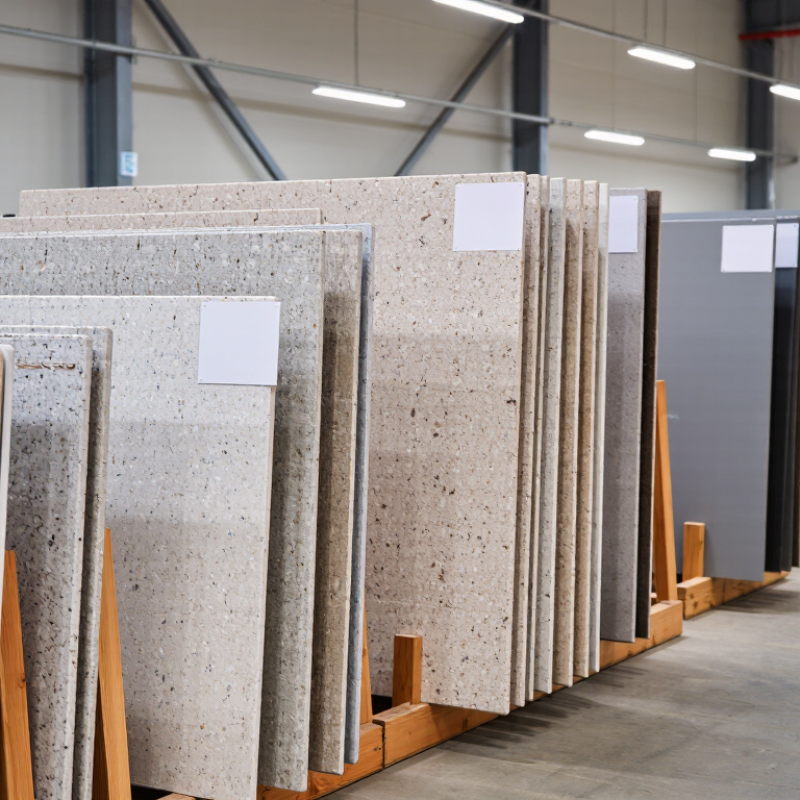
Global buyers are looking more closely at stone’s origin, consistency, and documented performance. Sesame White Granite is valued for its pale ground, fine gray speckling, and practical use on countertops, floors, and wall cladding. In person, slabs can differ: one may look almost ivory, while another shows darker mineral flecks. Details matter.

Market reports offer useful context, but not every granite variety is tracked separately. Grand View Research’s Natural Stone Market report discusses the broader market, while the U.S. Geological Survey’s Mineral Commodity Summaries covers dimension stone. ITC Trade Map also provides trade data under relevant worked-stone classifications. These sources help frame demand and trade flows; they do not establish the quality of any individual supplier. Public data for Sesame White Granite specifically remains limited. That gap matters.

A reliable supplier comparison should go beyond polished product photos. Buyers can request current slab images, quarry or processing details, available finishes, packing specifications, and recent test documentation. For technical checks, reports aligned with recognized stone-testing standards can help assess properties such as water absorption and flexural strength. Still, paperwork cannot replace checking the actual batch. Color variation is natural, and sometimes the promised match is imperfect. The following supplier overview considers product range, export experience, documentation, and communication, while encouraging buyers to verify claims directly before placing an order.
Top 10 Sesame White Granite Suppliers for Global Buyers

Understanding Sesame White Granite and Its Global Market

Sesame White Granite is commonly recognized by its pale gray or creamy background and scattered dark mineral flecks. The pattern can resemble sesame seeds, but the appearance is not identical across quarries or production batches. Commercial names also vary by region, so buyers should confirm the stone’s origin and characteristics rather than rely on its label alone. A polished sample may look brighter than a honed surface. Small differences matter.

For global buyers, consistency is often as important as color. Ask for current slab photographs, usable dimensions, finish details, and the expected range of natural variation. Check technical data for water absorption, flexural strength, and abrasion resistance, especially for flooring or exterior use. Request test results tied to the actual material where possible. A sample can mislead.

Shipping adds another layer of planning. Confirm crate dimensions, slab thickness, packing methods, and inspection arrangements before production begins. Compare delivered cost, not just the quarry price; freight, breakage risk, and lead times can change the calculation. Sesame White Granite may suit counters, wall cladding, and busy interior floors, but the finish and application should be assessed together. There is no perfect batch, and pretending otherwise invites disappointment.

Key Factors for Evaluating Sesame White Granite Suppliers

When comparing Sesame White Granite suppliers, request samples from the actual production lot, not only showroom pieces. Fine grey speckles and pale backgrounds can shift between quarry blocks. Small details matter. Ask for block or lot references, slab thickness tolerances, finish options, and packing photos before placing a large order. A polished sample can still disappoint under different lighting.

Check technical evidence, not broad claims. ASTM C97 tests water absorption and bulk specific gravity; ASTM C880 measures flexural strength. Ask for recent results tied to the offered material, and confirm the test method and laboratory. The USGS 2024 Mineral Commodity Summaries reports roughly 2.3 million metric tons of U.S. dimension-stone output in 2023, illustrating the scale and variety of this commodity. It does not establish the quality of any individual supplier, so batch-level records matter more.

Evaluate how the supplier handles variation and defects. Request close-up images of slabs, a written inspection process, and clear replacement terms for cracks, resin repairs, or mismatched bundles. Confirm crate labeling, moisture protection, and loading plans; chipped corners often begin with poor handling. Ask for references from projects using similar slab sizes. One weakness in many comparisons is relying on price alone. Freight, yield loss, and inconsistent calibration can change the real cost.

Top 10 Sesame White Granite Suppliers for Global Buyers

Choosing among the top 10 Sesame White Granite suppliers for global buyers takes more than comparing quoted prices. Ask each supplier for recent photos or videos of full slabs, not only polished samples. Sesame White can show warm beige grains, darker flecks, and noticeable variation between blocks. A small sample may not reveal the pattern across a kitchen island or large floor.

Check the supplier’s written specifications for slab thickness, finish, edge condition, and acceptable color variation. Request measurements and packed-crate photos before shipment. Confirm how the stone is inspected, protected, and documented, and ask who handles damage claims. Export experience matters, but so does clear communication. Replies that avoid direct answers deserve attention. Even careful inspections cannot make every natural slab identical; buyers should agree on realistic expectations in writing.

Tips: View samples in both daylight and warm indoor lighting. Match the approved sample to the production batch when possible. Ask for a clear lead time, packing details, and replacement terms. Keep one concern in mind: shipping schedules can change, so avoid planning installation around an unconfirmed arrival date.

Mohs Hardness of Common Granite-Forming Minerals

Quartz, feldspar, and mica are common granite-forming minerals. These general reference ranges are not a laboratory result or a composition claim for any specific Sesame White Granite slab. Global buyers should request product-specific test reports from suppliers.

Comparing Supplier Products, Capabilities, and Certifications

Sesame white granite can differ noticeably from one quarry lot to another. Background tones may range from warm ivory to pale grey, with charcoal and burgundy flecks. Compare actual slab photographs or inspect a physical sample under natural light. Ask whether the quoted material comes from the same lot as the sample. Small differences matter across a large hotel floor. They are easy to miss on a screen.

Compare suppliers by product range, processing capacity, and documented quality controls. Check available slab sizes, thickness tolerances, finishes, and edge work. Request recent inspection records and test reports relevant to the intended use. Certifications should be current, independently verifiable, and applicable to the product or facility being offered. A certificate alone does not prove consistent color or careful packing. Ask for export packaging details, lead times, and a clear process for handling damaged pieces. Some suppliers may answer slowly; that is worth noting, though it is not proof of poor quality.

Tips: Request matching samples from several slabs, not one hand-picked piece. Confirm crate labels, piece counts, and finish before dispatch. Keep written approval records. Even with good checks, natural stone varies; buyers sometimes underestimate that. Allow room for variation in the design.

How Global Buyers Can Verify and Select a Supplier

Global buyers should verify the quarry source, not just the “Sesame White” trade name. Granite patterns vary between blocks, and a small sample may hide darker veins or color shifts. Request recent photographs of full slabs, with measurements and batch identifiers. Ask whether the offered material comes from the same quarry and production lot.

The USGS Mineral Commodity Summaries 2024 valued U.S. dimension-stone production at about $420 million in 2023. That figure covers many stone types; it is not a price or quality benchmark for Sesame White granite. Request an independent laboratory report for the actual lot. ASTM C615/C615M provides relevant granite specification and test methods, including water absorption and compressive strength. Check that the report names the tested material and gives test dates. Details matter.

Inspect the supplier’s packing plan, too. Ask for crate dimensions, slab counts, edge protection, and loading photographs. Confirm how breakage, shortages, and color variation are recorded before shipment. A video call can reveal storage conditions, but it cannot replace inspection. I would treat polished sample chips cautiously; they can look more uniform than full slabs. Ask for references from buyers handling similar volumes, then verify shipping records where possible.

Top 10 Sesame White Granite Suppliers for Global Buyers — How to Verify and Select a Supplier

Use this checklist to compare suppliers. “Sesame White” is a commercial stone name, and appearance and technical properties can vary by quarry, block, and production lot. Request evidence for the exact material and shipment being offered rather than relying on a trade name or generic figures.

No. Supplier-selection dimension What to request or check How to verify Buyer decision signal
1 Quarry and material identity Quarry location, stone trade name, block or lot reference, and confirmation of whether the supplier operates the quarry or purchases from another source. Match the documents, sample labels, production photos, and invoice description. Ask for the quarry source in writing. Clear, consistent traceability; no unsupported claim that the trade name guarantees a particular geological source.
2 Appearance and lot consistency Recent photos or video of the actual blocks, slabs, or finished pieces; agreed limits for color, grain, veining, and natural variation. Approve a representative sample and compare it with images of the production lot under neutral lighting. Record acceptance criteria in the purchase order. Buyer approves the actual lot or a clearly identified control sample, not only a catalog image.
3 Independent test reports Recent test results for the offered stone, including the test method, laboratory, test date, sample identification, and measured values. For dimension stone, ASTM methods commonly include C97 for absorption and bulk specific gravity, C170 for compressive strength, C99 for modulus of rupture, and C880 for flexural strength. Confirm the applicable project specification and edition. Reports are traceable to the material or source being supplied and come from a competent laboratory; generic figures are not treated as lot-specific proof.
4 Product specification and tolerances Written details for product form, nominal dimensions, thickness, finish, edge profile, dimensional tolerances, and permitted defects. Compare the quotation, approved drawings, sample, and purchase order. Ask the supplier to state how dimensions and tolerances will be checked before packing. Specifications are measurable and agreed before production, with no ambiguous terms such as “standard size” left undefined.
5 Finishing and quality control Available finishes, inspection stages, defect classification, repair disclosure, and final inspection records. Request close-up images of finished edges and surfaces and a written inspection checklist. For important orders, arrange or commission a pre-shipment inspection. The supplier documents inspection results and discloses repairs or substitutions before shipment.
6 Production capacity and lead time Current production schedule, quantity available, production lead time, and expected packing and dispatch dates. Ask for a dated production plan and progress updates linked to the order. Check that the schedule accounts for approval samples and inspection. Dates are specific, realistic, and supported by a clear update and escalation process.
7 Packing and transport protection Packing method, crate or bundle details, protection for corners and surfaces, package markings, and loading photos. Agree packing requirements in writing and request pre-loading photos. Confirm packaging and shipment arrangements comply with the destination and carrier requirements. Packing is suitable for the product and route, and responsibility for damage claims is stated in the contract.
8 Export documents and trade terms Commercial invoice, packing list, transport document, applicable origin documentation, and a quotation identifying the named place and agreed Incoterms® rule. Check document requirements with the destination-country customs authority or customs broker. Use Incoterms® 2020 wording with a precise named place where applicable. The supplier explains which party handles export clearance, main carriage, insurance, and import formalities under the agreed terms.
9 Commercial terms and payment security Itemized quotation, currency, payment milestones, quote validity, cancellation terms, and written process for shortages or non-conforming goods. Verify the contracting entity and bank beneficiary independently. Avoid changing payment details based solely on an email request; confirm changes through a trusted channel. Payment terms and remedies are documented, transparent, and consistent across the quotation, contract, and invoice.
10 Business verification and references Registered legal-entity details, operating address, relevant export experience, and references for comparable stone products or markets. Check the entity through the relevant official company registry where available. Contact references independently and verify that certificates apply to the named entity and are current. Identity, address, references, and certification details are verifiable and consistent with the contracting party.

Comparison note: Score each candidate against the same project requirements and evidence. Do not rank suppliers using unverified price claims, generic stone-property values, or appearance images that are not tied to the offered production lot.

DARK/LIGHT
crossmenu