CHINA'S LEADING CONTAINER HOMES,  MODULAR HOMES & COMMERCIAL BUILDINGS
REQUEST A QUOTE

2026 Top Prefab Homes for Global Buyers What to Know?

Prefab homes are entering 2026 with stronger global attention, but popularity does not guarantee suitability. Buyers now compare factory precision, energy performance, delivery times, and local approval requirements. A compact home arriving in a sealed container may look efficient. Yet the site may still require foundations, drainage, cranes, and skilled installation.

The housing shortage gives this market real urgency. UN-Habitat reports that about 1.6 billion people lack adequate housing worldwide. It also estimates that nearly 3 billion people may need access to adequate housing by 2030. Prefabrication cannot solve that challenge alone. It can, however, reduce material waste and improve production consistency when factories maintain strict quality control. The International Energy Agency reports that buildings represent roughly 30% of global final energy use and 26% of energy-related emissions. Therefore, insulation, airtightness, glazing, and efficient heating deserve more attention than attractive floor plans.

This guide examines leading prefab homes for global buyers in 2026. It considers design flexibility, climate suitability, certifications, transport logistics, warranty coverage, and total ownership costs. Local building codes remain decisive. A model approved in Sweden may need major changes in Canada, Australia, or the Gulf region. That detail is often underestimated.

There is no universal winner. A low-cost model may become expensive after shipping, taxes, assembly, and site preparation. Buyers should request structural drawings, energy data, factory records, and realistic delivery schedules. Even experienced purchasers can miss hidden costs. Careful comparison matters more than glossy brochures.
2026 Top Prefab Homes for Global Buyers What to Know?

What Prefab Homes Are and Why Global Buyers Choose Them

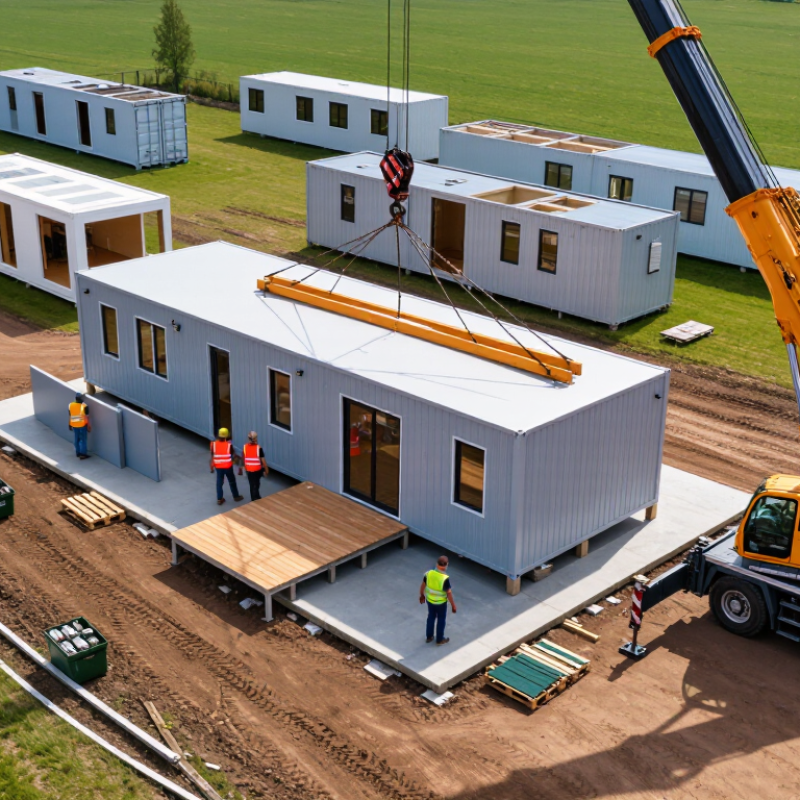
Prefab homes are houses made in controlled factories, then transported to the building site. Workers assemble walls, floors, roofs, and interior sections with measured equipment. At the site, crews connect modules, finish joints, and link utilities. This process differs from traditional construction, where most work happens outdoors. It is not automatically cheap. Design, shipping, permits, foundations, and crane access can change the final cost.

Global buyers choose prefab homes for predictable production and shorter on-site schedules. A factory can protect materials from rain, dust, and crowded job-site delays. For a family moving to a rural area, panels may arrive with insulation, wiring routes, and windows prepared. That detail can reduce waste and simplify quality checks. Buyers also value adaptable layouts. A compact two-bedroom plan may suit a holiday property, while extra rooms can support multigenerational living.

International ownership requires careful local verification. Building codes, wind loads, seismic rules, taxes, utilities, and import procedures vary widely. A home approved in one country may fail another country’s requirements. Buyers should request structural drawings, material specifications, energy calculations, warranty terms, and a delivery plan before paying. The foundation remains critical. A beautiful module cannot correct poor soil preparation or inaccurate measurements. Some expected savings may disappear through transport or local modifications. Prefab construction is efficient, but not effortless.
Key Prefab Home Types, Designs, and Construction Methods

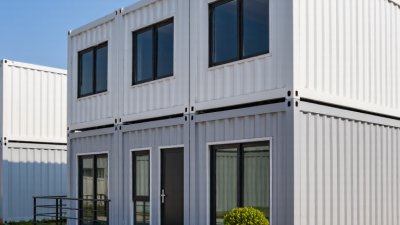
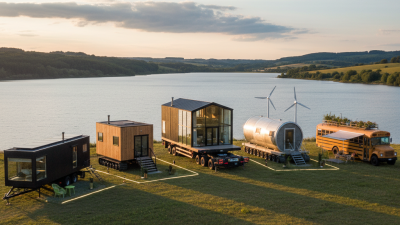
Prefab homes now serve global buyers through several distinct formats. Volumetric modular homes arrive as completed room sections, while panelized homes ship walls, floors, and roof panels. Kit homes offer more on-site assembly and may reduce transport costs. Each option suits a different budget, skill level, and project schedule.

Design decisions should respond to the local climate. Deep roof overhangs help in hot, rainy regions. High-performance insulation matters in cold areas. Large windows can brighten interiors, but they may increase heat loss or cooling demand. Timber frames feel warm and familiar, while light-gauge steel offers precision and resistance to insects. Factory-controlled production can improve consistency, although transport damage and foundation errors still occur. A perfect factory process cannot fix poor site preparation.

Tips: Ask for structural drawings, insulation values, fire ratings, and moisture-control details. Confirm local planning rules before ordering. Check how the home will be lifted, delivered, and connected to utilities. Visit a completed project if possible. I would also keep a contingency budget. Unexpected road access problems are common. Some online price estimates look attractive, yet they may exclude foundations, permits, taxes, or interior finishes. Review every item carefully with an independent local professional. That extra review may feel slow, but it can prevent expensive changes later.

2026 Top Prefab Homes for Global Buyers: Types, Designs, and Construction Methods

Typical construction timelines vary by design complexity, site preparation, transport distance, permitting, and local labor availability. Manufactured and modular homes generally use the highest level of factory production, while panelized and precut systems provide greater on-site design flexibility.

The ranges shown are indicative industry benchmarks for standardized residential projects and should be confirmed with local suppliers, engineers, and permitting authorities.

How to Compare Quality, Costs, and Delivery Options

Global buyers should compare prefab homes as complete systems, not attractive floor plans. McKinsey’s report, Modular Construction: From Projects to Products, estimates modular methods can cut construction time by 20–50% and costs by up to 20%. These figures are not guaranteed. Local labor, foundation work, permits, and utility connections can erase expected savings.

Inspect the specification line by line. Ask for structural calculations, insulation values, fire ratings, moisture protection, and factory quality records. A home may look precise while hidden joints remain vulnerable to water. The 2023 Global Status Report for Buildings and Construction states that buildings consumed about 30% of global final energy and produced roughly 26% of energy-related emissions. Better insulation, airtight windows, and efficient heating deserve more attention than decorative finishes.

Delivery requires equal scrutiny. Compare factory lead time, inland transport, port handling, customs responsibility, crane access, and local assembly. The World Bank’s 2023 Logistics Performance Index shows major differences between countries in infrastructure, shipment tracking, and delivery reliability. A low factory price can become expensive beside a narrow road or an unprepared foundation. Request a dated delivery schedule and a written list of exclusions. Keep contingency funds. I would also visit a completed project, if possible; photographs rarely reveal uneven flooring, delayed replacement parts, or poor drainage. Some comparisons remain imperfect, because suppliers measure quality differently. That uncertainty should be documented, not ignored.

2026 Top Prefab Homes for Global Buyers: What to Know? — How to Compare Quality, Costs, and Delivery Options

Prefab Home Type Typical Best Use Indicative Factory Price
per m² (USD)
Typical Total Project Cost
per m² (USD)
Factory Production Time Typical On-Site Assembly Quality and Durability Considerations Main Delivery Advantages Common Risks to Check
Panelized Timber or Light-Gauge Steel Detached homes, extensions, and low-rise housing in moderate climates $500–$1,100 $1,200–$2,800 6–14 weeks 2–6 weeks Check structural calculations, moisture protection, insulation continuity, fire resistance, and corrosion protection for steel components. Flat-pack shipping can reduce volume and allow flexible interior completion. Unclear weatherproofing scope, local code differences, and insufficient site drainage.
Volumetric Modular Multi-unit housing, apartments, hotels, worker accommodation, and rapid deployment $900–$1,800 $1,800–$4,000 8–20 weeks 1–4 weeks per module group Factory-controlled assembly can improve consistency; verify lifting points, connection details, acoustic separation, and transport damage procedures. Most interior finishes and services may be completed before delivery, shortening site work. Oversized-load permits, crane access, road limitations, module joints, and local approval requirements.
Precast Concrete Modular High-durability housing, coastal locations, schools, and projects requiring high mass $850–$1,700 $1,700–$3,800 10–24 weeks 2–8 weeks Review concrete strength records, reinforcement details, crack-control methods, waterproofing, thermal bridging, and seismic design. High thermal mass and robust performance when properly engineered and transported. Higher shipping weight, foundation tolerances, crane capacity, and potential cracking during handling.
Insulated Sandwich-Panel Home Small homes, cabins, site offices, and projects prioritizing rapid enclosure $350–$850 $900–$2,100 4–10 weeks 1–3 weeks Compare insulation thickness, thermal conductivity, fire classification, joint sealing, UV resistance, and panel fasteners. Lightweight components are generally economical to transport and quick to install. Condensation, poor edge sealing, fire-code incompatibility, and lower acoustic performance in basic specifications.
Shipping-Container-Based Conversion Temporary accommodation, compact units, remote facilities, and modular site buildings $450–$1,000 $1,000–$2,400 6–14 weeks 1–4 weeks Inspect steel condition, structural reinforcement around openings, corrosion treatment, insulation, ventilation, and hazardous-material documentation. Standardized external dimensions simplify stacking and multimodal transportation. Heat gain, condensation, restricted interior width, used-container condition, and local residential approval.
Mass-Timber Modular Low- to mid-rise housing and projects seeking renewable structural materials $900–$1,900 $1,900–$4,200 10–24 weeks 2–6 weeks Verify moisture content, fire-engineering strategy, connection design, acoustic layers, certified timber sourcing, and dimensional tolerances. High prefabrication accuracy and a favorable strength-to-weight ratio can reduce site time. Moisture exposure during storage, availability of qualified installers, and higher design coordination requirements.
Cost and delivery note: The ranges are indicative 2026 planning estimates in USD for residential projects and can vary substantially by country, floor area, design complexity, labor rates, local taxes, shipping distance, exchange rates, foundation conditions, permits, utility connections, and site access. Factory prices commonly exclude land, foundations, site preparation, utility works, professional fees, permits, customs duties, taxes, furniture, and final landscaping.
Buyer comparison checklist: Confirm the scope of supply, applicable building codes, structural calculations, energy-performance target, fire and acoustic ratings, warranty terms, inspection rights, Incoterms, insurance responsibility, installation supervision, spare parts, commissioning, and the precise handover standard before comparing quotations.

Legal, Land, Climate, and Utility Requirements by Region

2026 Top Prefab Homes for Global Buyers: What to Know?

Buying a prefab home across borders involves more than choosing a floor plan. Each region applies different rules for land use, building approval, and imported materials. Confirm zoning before paying a deposit. A beautiful unit may still be refused on agricultural land or inside a protected coastal zone. Ask a licensed local surveyor to verify ownership, access rights, setbacks, and construction permits.

Climate changes the technical brief. In seismic areas, request stamped structural calculations and suitable anchoring details. Snow regions need verified roof-load capacity, not attractive roof images. Tropical buyers should examine wind ratings, corrosion protection, ventilation, and drainage. Dry regions require careful water planning and fire-resistant materials. The assumption that factory construction suits every climate is tempting, but incomplete.

Utilities deserve equal attention. Check whether the plot can connect to electricity, mains water, wastewater, gas, or reliable alternatives. A remote site may need a septic system, water tank, solar equipment, and backup storage. Local engineers should confirm soil conditions, foundation depth, flood exposure, and road access for delivery vehicles. Import duties and certification rules can also change the final cost sharply. I would not treat a supplier checklist as legal proof. Documents need independent review, and requirements can change during the approval process. Small details matter.

How to Select a Reliable Prefab Home Provider in 2026

Selecting a reliable prefab home provider in 2026 requires more than comparing online prices. Examine completed projects in climates similar to yours. A coastal home needs corrosion-resistant materials, while a cold region requires tested insulation and heating systems. Ask for structural drawings, energy data, factory quality records, and clear delivery schedules. Independent engineers should review the design before production begins.

Tips: Request recent client references. Verify licenses and relevant certifications. Ask whether the provider adapts designs to local building rules. Visit the factory, or request a live video tour showing material storage and assembly checks. Read the warranty carefully. It should explain repair times, transport responsibilities, and excluded damage. Avoid paying the full amount upfront. Use milestones linked to design approval, factory completion, delivery, and installation.

Reliable communication matters as much as technical skill. The provider should answer questions in writing and identify one project manager. Check how electrical, plumbing, foundation, and site work are coordinated. Some companies show beautiful finished rooms but provide weak documentation. That is a warning. No checklist is perfect. Even experienced buyers can overlook local soil conditions or import costs. Request a complete budget with taxes, permits, shipping, cranes, and on-site labor included. A dependable provider welcomes careful questions and admits what still needs verification.

DARK/LIGHT
crossmenu