Choosing the best prefab units for global sourcing requires more than comparing catalog prices. It demands a clear view of design, manufacturing, transport, installation, and long-term use. A unit that looks affordable in a brochure may become expensive after customs handling, inland delivery, site preparation, and local modifications.
Experienced buyers begin with the project’s real conditions. Climate matters. A coastal housing project may need corrosion-resistant fasteners, sealed joints, and stronger moisture protection. Remote sites may require compact modules, simple assembly steps, and replacement parts that arrive quickly. Reliable suppliers should provide material specifications, factory quality records, inspection reports, and realistic production schedules. Independent audits can also reveal weaknesses that sales presentations overlook.
Details matter greatly. Check insulation performance, fire ratings, electrical compatibility, plumbing standards, and lifting points before placing an order. Confirm whether the manufacturer has completed similar international projects. Ask for samples, pilot units, and clear acceptance criteria. These steps reduce costly surprises, although they cannot remove every risk. Shipping delays happen. Specifications can be misunderstood. Even experienced teams sometimes underestimate local labor requirements.
The strongest sourcing decision balances price with performance, compliance, supplier capability, and lifecycle value. It also respects regional building practices and applicable regulations. A thoughtful comparison of prefab units should expose trade-offs, not hide them. Careful planning creates confidence, but honest review keeps that confidence realistic.
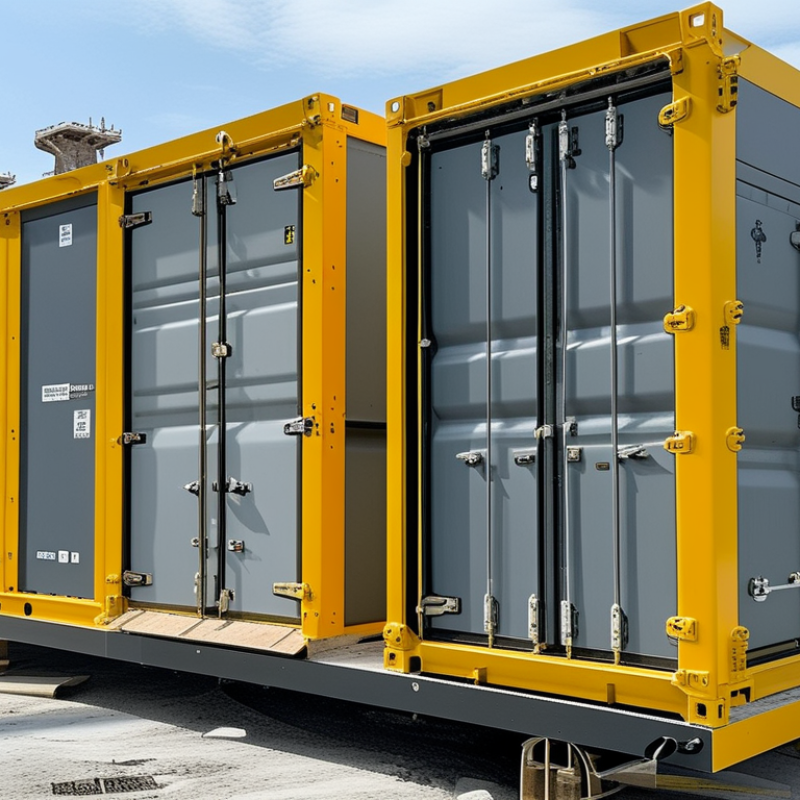
Before comparing suppliers, define the project in measurable terms. Record the site climate, occupancy, floor area, utility connections, delivery route, installation equipment, and target completion date. Specify wind, seismic, fire, thermal, acoustic, and corrosion requirements for the destination.
McKinsey Global Institute reported that modular construction can reduce schedules by 20–50% and costs by up to 20%. Those gains depend on early planning, not merely factory production.
Create a requirement sheet for every prefab unit. Include internal dimensions, structural loads, insulation values, finishes, service points, tolerances, packaging limits, and replacement-part needs. A coastal worker unit may need stronger corrosion protection, while a remote clinic needs reliable water treatment and backup power.
UNEP’s 2023 Global Status Report found that buildings and construction produce 37% of global energy and process emissions. Therefore, assess operating energy, transport weight, and future disassembly, not only the purchase price.
Request drawings, material declarations, test records, and installation instructions before signing. A third-party inspection can check welds, moisture control, electrical safety, and dimensional accuracy. Require a prototype or sample unit when the project has unusual conditions. This step feels slow. It can prevent expensive modifications at the destination. However, even a detailed checklist may miss local labor skills or customs delays. Review those risks with engineers, logistics specialists, and local authorities before finalizing the unit specification.
Global sourcing starts with matching the prefab unit to its final use, climate, and transport route. Flat-pack modules suit remote projects because they ship efficiently and assemble quickly. Volumetric modules arrive with rooms largely finished, reducing site labor but increasing freight volume. Panelized systems offer design flexibility, especially when local crews can complete interior work. I have found that the cheapest unit on paper is rarely the cheapest delivered. Port handling, crane access, storage, and regional labor can change the calculation.
Material choice affects durability, weight, insulation, and maintenance. Steel frames tolerate demanding transport and provide consistent dimensions. However, thermal bridging needs careful detailing. Timber structures can reduce weight and create a comfortable interior, yet moisture control becomes critical during storage and installation. Concrete units provide strength and acoustic mass, but their weight may restrict shipping options. Check insulation performance, fire resistance, corrosion protection, and replacement access before comparing prices. A low initial quote can hide difficult repairs.
Construction method matters as much as the unit itself. Factory-controlled assembly improves repeatability when quality records, inspection points, and moisture checks are documented. On-site assembly allows adjustments, but workmanship may vary between crews. Ask for sample drawings, tolerance limits, test reports, packing plans, and installation sequences. Verify electrical and plumbing layouts with qualified local professionals. I would not rely on photographs alone. A small pilot shipment can reveal damage, missing hardware, or unclear instructions. That step feels slow, but it often exposes costly assumptions.
Supplier evaluation should begin with evidence, not polished catalog images. Request recent audit reports, production records, and customer references from similar projects. ISO 9001 certification matters because it signals a documented quality system. However, it does not guarantee flawless units. The ISO Survey 2022 recorded 1,265,216 ISO 9001 certificates worldwide, showing broad adoption but not equal performance.
Check certifications against the destination market and unit design. Verify structural calculations, fire ratings, electrical testing, and material traceability. Ask who issued each certificate and when it expires. A supplier should also explain factory acceptance testing, nonconformance handling, and corrective actions. Short answers worry me. Specific evidence builds trust.
Production capability deserves a physical review, even through a live video inspection. Observe welding stations, dimensional checks, packaging areas, and finished-unit storage. Compare monthly capacity with your order schedule, including peak-season limits. McKinsey’s report, Modular construction: From projects to products, estimates that modular methods can reduce project time by 20–50% and costs by up to 20%. Those gains disappear when factories lack reliable planning or installation support. I would request a pilot batch before signing a large contract. It may feel slower, but one imperfect prototype can expose hidden tolerance, moisture, or transport problems. No checklist is perfect. Reassess suppliers after each shipment.
How to Choose the Best Prefab Units for Global Sourcing?
Global shipping can decide whether a prefab unit remains profitable. UNCTAD’s Review of Maritime Transport 2024 states that ships carry over 80% of world trade by volume. A large module needs more than a low factory price. Check container dimensions, port access, lifting limits, and inland road restrictions before signing. A 3.2-meter-wide unit may require escorts, route surveys, or temporary street controls. Measure twice.
Import rules can change the project schedule. The World Bank’s 2023 Logistics Performance Index assessed 139 economies and emphasized customs efficiency, infrastructure, and shipment reliability. Prepare a complete document pack, including commercial invoices, packing lists, certificates of origin, product specifications, and local compliance evidence. Confirm tariff classification with a qualified customs professional. Do not assume one certificate works everywhere. Rules vary.
Installation logistics deserve equal attention. Ask whether local crews can unload, connect, seal, and inspect the units. Confirm crane capacity, ground bearing pressure, storage space, and weather protection. A shipping plan without an installation sequence is incomplete. On one project, a small access error can delay the crane for days. That risk is easy to underestimate. Build a landed-cost model covering freight, duties, port handling, inland transport, insurance, equipment, labor, and contingency. The model will still be imperfect, but it exposes weak assumptions early.
| Prefab Unit Type | Typical External Size | Common Shipping Method | Container & Road Transport Considerations | Import & Customs Considerations | Installation Logistics | Global Sourcing Suitability |
|---|---|---|---|---|---|---|
| Flat-Pack Panel Unit | Panels are usually designed to fit standard shipping-container dimensions; finished room modules are assembled on site. | Containerized sea freight; truck delivery from the destination port. | Efficient use of container volume. Confirm package weight, lifting points, moisture protection, and maximum road vehicle dimensions in the destination country. | Classify structural panels, insulation, doors, windows, wiring, and plumbing components separately where required. Wood packaging may require ISPM 15-compliant treatment and marking. | Requires a level foundation, accurate surveying, panel sequencing, weatherproofing, and local electrical and plumbing trades. | High for remote sites, repeatable designs, and projects where shipping volume is a priority. |
| Volumetric Modular Room | Usually limited by road height, width, turning radius, bridge clearance, and lifting capacity rather than factory production capacity. | Ro-ro or heavy-lift sea freight when dimensions exceed ordinary container limits; specialized trucking after arrival. | Oversize or overweight permits may be needed. Conduct a route survey covering port access, low bridges, narrow roads, overhead utilities, and delivery time restrictions. | The complete module may be treated as a building component or as multiple goods categories. Confirm tariff classification, duty, value-added tax, and local building-product requirements before shipment. | Needs engineered lifting plans, a suitable crane, temporary bracing, connection inspections, and rapid weather sealing after placement. | Medium to High where local transport infrastructure and crane access are reliable. |
| Foldable or Expandable Unit | Collapsed dimensions can be substantially smaller than the operational footprint; verify the manufacturer’s packed dimensions and center of gravity. | Containerized sea freight is common; final delivery normally uses a standard or specialized truck. | High packing efficiency, but hinges, hydraulic parts, seals, and locking systems need protection against saltwater and impact during transit. | Mechanical, electrical, and building-material components may have different import controls. Check product safety documentation and any certification required for installed systems. | Installation may require a crane or telehandler, a level base, mechanical unfolding, utility connections, and inspection of all seals and locking points. | High for temporary accommodation, emergency facilities, and projects with limited shipping volume. |
| Steel Frame Kit | Members are cut and bundled for assembly; final dimensions depend on the project design and local engineering requirements. | Containerized sea freight for cut-to-length members; breakbulk or flat-rack transport for oversized components. | Check bundle length, steel weight, corrosion protection, unloading equipment, and whether the destination road network permits the planned truck configuration. | Steel products may be subject to trade remedies, origin documentation, mill certificates, and structural-product standards. Confirm the applicable tariff code with a customs professional. | Requires a local structural engineer, foundation anchor verification, bolt or weld inspection, temporary stability measures, and weatherproof cladding installation. | High when local labor is available and design flexibility is more important than factory completion. |
| Concrete or Precast Module | Large and heavy; dimensions are primarily constrained by lifting capacity, road limits, and route geometry. | Specialized heavy-lift, breakbulk, or project cargo shipping rather than ordinary container freight. | Freight cost can be driven by mass and handling rather than volume. A route survey, axle-load review, escort planning, and port lifting assessment are essential. | Obtain concrete specifications, reinforcement records, test reports, origin documents, and any required conformity evidence for structural products. | Needs engineered foundations, heavy cranes, prepared access roads, controlled lifting, joint sealing, and careful tolerance management. | Low to Medium for long-distance international sourcing unless the project is near suitable port and heavy-transport infrastructure. |
| Sanitary or Utility Pod | Compact factory-built bathroom, kitchen, or service module; dimensions vary according to the building grid and utility layout. | Containerized sea freight with protective crating and internal bracing. | Efficient for multiple identical units. Protect fragile fixtures, drain outlets, valves, and finished surfaces from vibration and condensation. | Plumbing fixtures, electrical assemblies, water-contact materials, and appliances may have separate national approval or labeling requirements. | Requires pre-coordinated service points, lifting or trolley access, pressure testing, electrical testing, waterproofing checks, and commissioning. | High for hotels, hospitals, student housing, and other projects with repeated wet-area layouts. |
Global sourcing should start with a landed-cost model, not a factory quote. Include tooling, inspection, export packing, inland haulage, ocean freight, duties, installation, and maintenance. McKinsey’s 2019 modular-construction report estimates potential cost reductions near 20% and schedule gains of 20–50%. Those are potential gains. Design repetition matters. One-off customization can erase them.
Freight risk deserves equal attention. UNCTAD’s Review of Maritime Transport 2023 reports that shipping carries over 80% of global merchandise trade by volume. The World Bank’s 2023 Logistics Performance Index found only about 60% of shipments arrived within scheduled time during its measured period. That delay can create storage charges, weather damage, and missed site crews. Price is not resilience. Ask suppliers for packaging tests, spare-part lists, warranty response times, and documented factory acceptance checks.
Price is not resilience.
Long-term performance needs numbers. Use ISO 15686-5 life-cycle costing principles to compare energy, cleaning, repairs, replacement cycles, and disposal. A cheaper wall panel may require repainting every three years. That small defect compounds. Request test results for thermal transmittance, fire resistance, water tightness, and corrosion exposure before approval. However, reports are not reality. Site climate, operator training, and incomplete drawings can overturn a polished calculation. Leave contingency openly visible. Otherwise, the model looks precise, but remains fragile.