China has become a major manufacturing base for prefab container homes, supported by strong steel processing, modular production, and export logistics. Global buyers now compare more than factory prices. They examine insulation, corrosion protection, fire safety, transport dimensions, and local installation requirements.
Market data supports this growing interest, although definitions remain inconsistent. Grand View Research valued the global modular construction market at approximately USD 91.33 billion in 2022, with continued growth projected through 2030. Mordor Intelligence estimated the modular construction market at about USD 91.57 billion in 2024. These figures include broader modular buildings, not only prefab container homes. That limitation matters. Industry statistics can make the niche appear more precise than it is.
Architect Adam Kalkin, widely recognized for container-based architecture, has said, “I like the idea of the container as a kind of raw material.” His perspective explains the appeal: a steel module offers a repeatable frame, but it does not automatically create a comfortable home. Buyers still need verified thermal calculations, tested wall systems, accurate factory drawings, and transparent quality records.
China’s leading suppliers can provide bathrooms, kitchens, wiring, windows, and finishes inside controlled production lines. Factory experience helps. Yet quality varies between suppliers, and attractive photographs prove little. A serious comparison should review ISO documentation, material specifications, sample units, inspection procedures, and after-sales support. The best prefab container homes are not simply cheap boxes. They are engineered products adapted to climate, transport, and daily living. That distinction deserves closer attention.
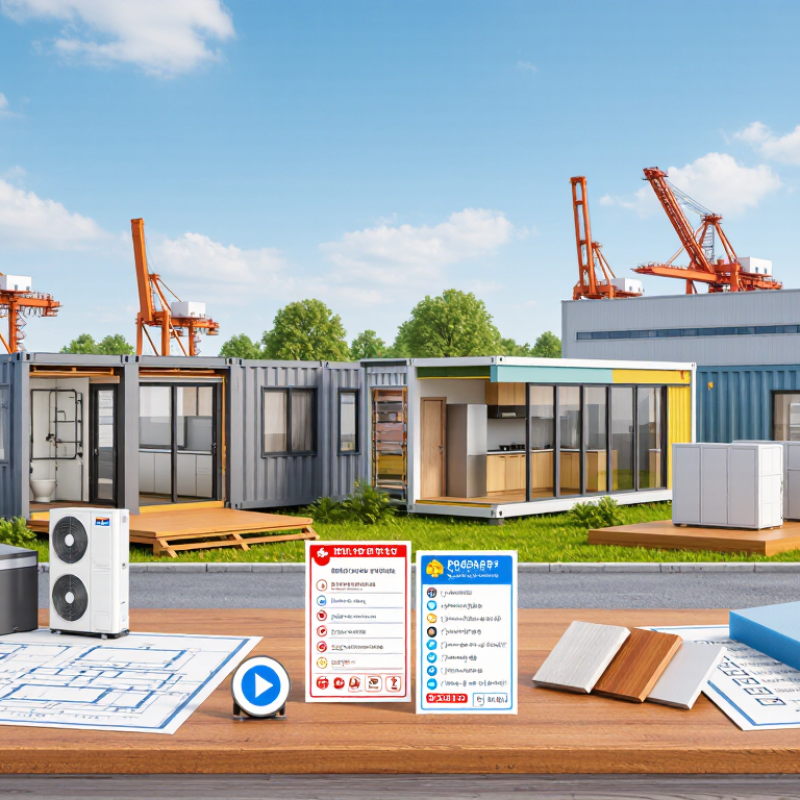
China Top Prefab Container Homes for Global Buyers?
Prefab Container Homes Defined: ISO 668 Sizes and Global Housing Uses
Prefab container homes are more than steel boxes. Their planning begins with ISO 668, the international framework for freight-container dimensions. Common ISO 668 lengths include 6,058 millimetres and 12,192 millimetres. Standard external width is 2,438 millimetres. Typical heights are 2,591 or 2,896 millimetres. These measurements support predictable shipping, stacking, and factory production.
McKinsey’s 2019 report on modular construction estimates schedule reductions of 20–50% when work moves into controlled facilities. That advantage is practical. Wall panels, wiring, and plumbing can be assembled beside a clean factory floor. Inspectors can check more details before dispatch. However, ISO 668 defines container geometry, not residential comfort, fire performance, or structural approval.
Global housing use still depends on climate and local regulations. UN-Habitat has estimated that 1.6 billion people live in inadequate housing. This figure explains the interest in faster, adaptable systems. A 12,192-millimetre module may suit a compact family layout. Tropical projects need ventilation, shading, and corrosion protection. Cold regions require continuous insulation and thermal-bridge control. Details matter. Windows can reduce wall strength. Bathrooms consume more space than drawings suggest. Field reviews often reveal cramped furniture layouts. That weakness deserves honest attention. Buyers should verify materials, transport clearances, foundations, and permits with qualified professionals. ISO dimensions simplify coordination, but they never replace site-specific engineering.
ISO 668 series 1 containers use standardized external dimensions that support international transport and modular construction. The chart compares common 20-foot, 40-foot, and 40-foot high-cube formats used as the structural basis for compact homes, studios, offices, classrooms, and temporary accommodation.
Dimensions shown are nominal external measurements. Final usable space depends on insulation, doors, windows, utilities, and local building regulations. A 40-foot container provides approximately twice the footprint of a 20-foot container, while a high-cube model adds interior headroom.
China Top Prefab Container Homes for Global Buyers?
China’s Modular Construction Capacity: Factory Production and Quality Metrics
China’s modular construction sector combines repeatable factory work with fast project delivery. Production usually moves through steel cutting, frame welding, enclosure fitting, and final inspection. Each stage should have recorded checks. A clean factory floor helps, but paperwork matters more.
Experienced buyers should request measurable data, not attractive photographs. Useful records include steel thickness, weld inspection results, coating thickness, and dimensional tolerances. Insulation values should match the destination climate. Electrical systems also need testing for grounding, circuit protection, and load capacity. Water spray tests can reveal weak seals around windows, doors, and roof joints.
Small details matter.
A reliable supplier should provide material certificates, inspection reports, and packing records. Independent inspection before shipment can reduce avoidable disputes. Factory capacity is not only about the number of units produced monthly. It also includes defect tracking, worker training, spare-part planning, and corrective action.
Some quality figures may look impressive but lack context. A low defect rate means little without a clear inspection method. Buyers should ask how defects are counted and when testing occurs. I would also compare production samples with the approved drawings. Changes made during assembly can create expensive problems later. Modular construction is efficient, but it is not automatically precise. Careful verification remains necessary.
| Category | Metric | Reference Value / Target | Why It Matters to Global Buyers | Reference Basis |
|---|---|---|---|---|
| Standardization | 20-foot ISO container external size | 6,058 × 2,438 × 2,591 mm | Supports predictable transport, lifting, stacking, and site planning. | ISO 668 |
| Standardization | 40-foot ISO container external size | 12,192 × 2,438 × 2,591 mm | Provides a widely recognized module for larger rooms and multi-unit layouts. | ISO 668 |
| High-cube option | High-cube external height | 2,896 mm | Creates additional interior headroom and space for insulation and services. | ISO 668 container size classifications |
| Structural interface | Corner fitting compatibility | ISO 1161-compatible fittings | Allows use of standardized twist-locks, spreader beams, and lifting equipment. | ISO 1161 |
| Factory quality control | Welding procedure qualification | Qualified welding procedures and certified welders | Reduces structural variability between repeated modules. | ISO 3834; ISO 9606-1 |
| Dimensional control | Inspection of frame diagonals, openings, and connection points | Documented inspection against approved drawings | Helps ensure modules align during assembly and minimizes site modifications. | Project quality plan; ISO 9001 practices |
| Surface protection | Corrosion-protection system | Specified coating system with surface-preparation records | Important for humid, coastal, industrial, and high-salinity environments. | ISO 12944 coating-protection framework |
| Thermal performance | Insulation design | U-value calculated for the destination climate and local code | A single insulation thickness cannot suit every country or climate zone. | ISO 6946; destination-country building regulations |
| Fire performance | Fire classification of wall, roof, and interior finishes | Classification selected to meet the destination code | Fire requirements vary by occupancy, jurisdiction, and assembly type. | EN 13501-1; ASTM E84; ASTM E119, where applicable |
| Electrical compliance | Electrical system documentation | Wiring diagrams, circuit protection, grounding, and test records | Enables review by local inspectors and adaptation to destination voltage and frequency. | IEC 60364 principles; local electrical code |
| Plumbing quality | Pressure and leakage testing | Documented pressure, drainage, and fixture tests before shipment | Detects leaks before installation and reduces costly site rework. | Project inspection and testing plan |
| Factory production model | Production sequence | Frame fabrication → enclosure → MEP installation → interior finish → final inspection | Separates repetitive work from site assembly and improves process visibility. | Common modular-construction production workflow |
| Production capacity measurement | Usable capacity indicator | Reportable modules per month, line utilization, and lead time | More meaningful than an unverified annual capacity claim. | Buyer due-diligence KPI framework |
| Pre-shipment inspection | Inspection coverage | 100% visual and functional inspection of each completed module | Confirms doors, windows, fixtures, appliances, finishes, and services operate before loading. | Factory acceptance and inspection plan |
| Export logistics | Shipping configuration | Flat-pack, knock-down, or ISO-size module selected according to route and site access | Affects freight cost, port handling, crane requirements, and final assembly time. | Incoterms® 2020; carrier and port requirements |
| Buyer documentation | Technical dossier | Approved drawings, material schedules, test reports, packing list, and installation manual | Provides traceability and supports permitting, customs clearance, and site installation. | Project documentation requirements; destination authority requirements |
Note: Structural loads, wind resistance, seismic design, fire ratings, thermal targets, electrical systems, and foundations must be verified against the regulations of the destination country and the specific project site.
China’s prefab container homes vary widely in structural quality.
Global buyers should inspect the steel system, not only the floor plan. Cold-formed galvanized steel suits many wall panels, while heavier welded sections handle larger spans and lifting loads. Common grades include S350GD for formed members and S355 for welded frames, subject to local engineering rules. Higher strength does not automatically mean better performance.
Insulation deserves equal attention.
PIR panels offer strong thermal resistance with limited thickness, while mineral wool can improve fire performance and sound control. Check panel joints, floor insulation, vapor control, and roof ventilation. A small unsealed gap can create condensation behind the lining. Details matter. Actual energy performance depends on installation quality, climate, and window design.
ISO 1161 corner fittings
ISO 1161 corner fittings help standardize lifting and stacking interfaces for container-based modules. They must align accurately with certified dimensions, welds, and load paths. Buyers should request steel mill certificates, welding procedures, dimensional inspection records, and coating thickness reports.
A visual check is still useful: uneven welds, distorted corners, or rust under primer need investigation. ISO 1161 fittings do not certify the entire home. That distinction is often missed. In practice, suppliers may present clean drawings but provide incomplete test evidence. I would treat that as a warning, not a minor paperwork issue. A reliable factory should explain its assumptions clearly and accept independent inspection before shipment.
A compliant prefab container home begins with the destination, not the factory catalogue. Local building codes determine acceptable materials, structural calculations, escape routes, and electrical systems. Requirements vary sharply between coastal regions, deserts, snow zones, and earthquake-prone cities. Experienced suppliers should request site location, soil data, occupancy type, and intended service life before quoting. A low price is not proof of suitability.
Fire protection needs more than a flame-resistant wall panel. Buyers should verify tested wall, roof, floor, insulation, doors, and internal finishes as a complete assembly. Ask for test reports from recognized laboratories, not only translated brochures. Check smoke control, emergency exits, fire separation, and electrical protection with a local professional. Small gaps around service pipes can undermine a good design.
Wind and seismic safety depend on connections, foundations, openings, and installation quality. A reinforced frame may still fail if anchors are poorly placed. Energy compliance also requires insulation values, airtightness, window performance, ventilation, and climate-based heating or cooling calculations. Request stamped drawings, material traceability, inspection records, and installation instructions. Documents can be incomplete. That weakness deserves honest review. Independent approval before shipment may prevent expensive changes after arrival. Regional certification and final acceptance remain the buyer’s responsibility.
Choosing China’s top prefab container home requires more than comparing factory quotes. Build a complete cost sheet before judging value. Include the unit price, customization, foundation, local permits, inland delivery, ocean freight, insurance, customs, and installation. Ask for a dated quotation with clear exclusions. A low factory price can become expensive after arrival.
Lead time should be measured by milestones, not one attractive promise.
Request production time, inspection time, loading date, sailing schedule, and estimated port arrival. A reliable supplier can share recent production records and explain delays honestly. Weather, material shortages, and port congestion still matter. I would not treat any delivery date as fixed. A spreadsheet can mislead.
Shipping data needs practical detail.
Confirm container dimensions, package photos, gross weight, loading plans, and destination charges. Check whether the home fits standard transport limits.
For warranty evaluation, request written coverage
for structure, roof sealing, electrical systems, plumbing, windows, and appliances. Clarify response time, replacement procedures, labor responsibility, and evidence requirements.
A five-year warranty means little without after-sales communication. Keep inspection photos and serial records. That discipline protects both sides. Some buyers overlook installation quality, then blame the factory for local errors. The framework is useful, but it still needs careful judgment.