CHINA'S LEADING CONTAINER HOMES,  MODULAR HOMES & COMMERCIAL BUILDINGS
REQUEST A QUOTE

Why Choose Prefab Steel Homes for Global Buyers?

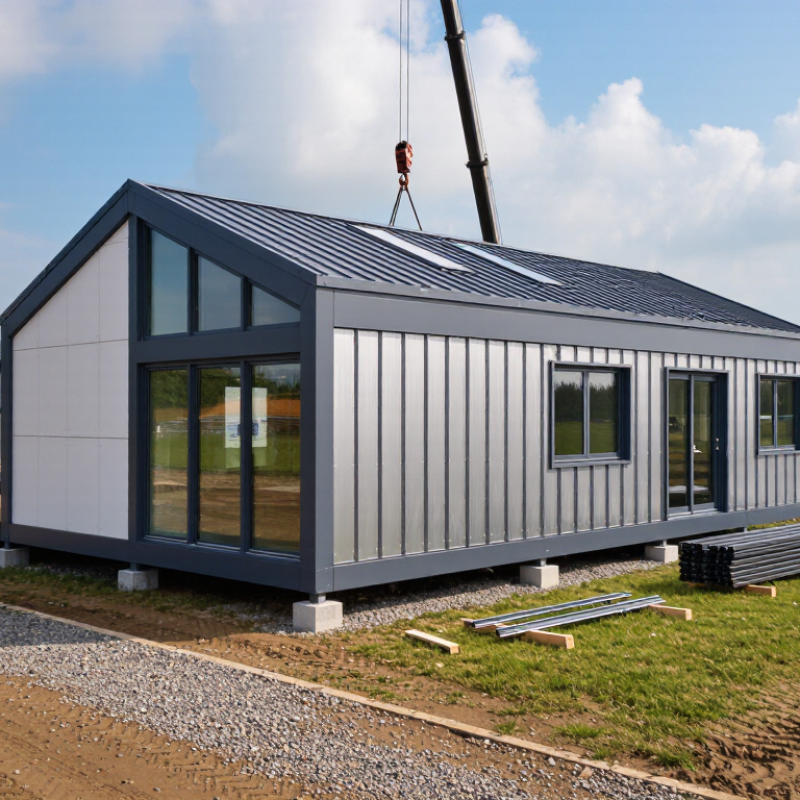
For buyers comparing housing options across continents, prefab steel homes offer a practical mix of speed, durability, and design flexibility. Factory production can reduce weather-related delays, while precision cutting limits material waste and dimensional errors. A steel frame also creates a clear structural system, from the roof trusses to the screw-fixed wall panels.

The McKinsey Global Institute reported that modular construction could eventually capture more than 20% of new-building activity in some major markets. Grand View Research valued the global modular construction market at approximately US$91.36 billion in 2023 and projected continued growth through 2030. These figures show strong momentum, but they do not guarantee a perfect result for every buyer. Land conditions, shipping distance, insulation standards, and local approvals still matter.

Mark Farmer, a respected construction and modern methods specialist, warned in his Modernise or Die review that “MMC is not a silver bullet.” That caution is important. Prefab steel homes can arrive with factory-finished panels, labeled components, and predictable assembly steps, yet poor site preparation can quickly erase those advantages. A muddy access road, an undersized crane, or unsuitable thermal detailing may create expensive delays.

The stronger choice is not simply the cheapest steel package. It is a verified system supported by engineering calculations, tested materials, transparent warranties, and local code knowledge. Global buyers should examine wind loads, snow loads, corrosion protection, fire performance, and energy efficiency before signing. Steel can be reliable. Only careful planning makes it resilient.
Why Choose Prefab Steel Homes for Global Buyers?

Prefab Steel Homes Defined: 90%+ Steel Recyclability According to AISI

Prefab Steel Homes Defined: 90%+ Steel Recyclability According to AISI

For global buyers, prefab steel homes offer more than fast assembly. Their main structural material can support a circular construction model. The American Iron and Steel Institute reports steel recycling rates above 90% in several established product streams. Steel can be recovered, processed, and reused without losing its core properties. This differs from many building materials that become difficult to separate after demolition.

World Steel Association data also identifies steel as the world’s most recycled material. Its industry reports estimate that about 680 million tonnes of steel are recycled globally each year. In a prefab home, factory-cut sections can reduce offcuts and improve material control. Bolted connections may also simplify future disassembly. That matters when a house moves, expands, or reaches the end of its service life.

The number deserves careful reading. A 90%+ recyclability claim does not mean every component is recycled automatically. Insulation, coatings, sealants, and mixed materials still require sorting. Local recovery facilities also vary widely between countries. Buyers should request material specifications, environmental product declarations, and documented recycling assumptions. Real projects sometimes reveal gaps between design intentions and site practices. Steel is highly recoverable, but responsible detailing remains essential.

Structural Safety: Designing for Wind Loads up to 250 km/h and Seismic Zones

Why Choose Prefab Steel Homes for Global Buyers?

Structural Safety: Designing for Wind Loads up to 250 km/h and Seismic Zones

Prefab steel homes can offer reliable structural performance when engineers design for local hazards. In exposed coastal areas, wind speeds may reach 250 km/h during severe storms. The exact design value depends on regional codes, terrain, building height, and exposure. A careful engineer checks these factors before selecting steel sizes or connection details.

Safety depends on the complete load path. Roof panels transfer pressure to rafters, walls, hold-downs, and reinforced foundations. Strong bolts, welded joints, diagonal bracing, and corrosion protection help keep the frame stable. Openings around doors and windows need special attention. Weak detailing there can interrupt the load path. It is a small area, but it matters greatly.

Seismic design requires controlled flexibility, not simply heavier materials. Engineers may use moment frames, shear walls, or cross-bracing to manage lateral movement. Base connections should resist uplift, sliding, and repeated vibration. Soil conditions also matter. A frame designed for firm ground may perform differently on soft soil. Local review remains essential, even when a factory produces precise components.

Real projects often reveal practical gaps. Transport damage, uneven foundations, or rushed bolt tightening can reduce performance. These problems are not always visible at first. Site inspections, torque checks, and documented installation procedures improve reliability. No structural system is perfect, and wind assumptions can be wrong without updated local data. Experienced teams therefore verify drawings, materials, and construction conditions before occupancy.

Faster Delivery: Off-Site Construction Can Cut Schedules by 30–50%

For global buyers, prefab steel homes provide a practical route to faster delivery. Off-site construction can cut schedules by 30–50% when design, permits, and foundation work progress together. In a controlled factory, teams assemble wall frames, roof sections, insulation, and service openings with repeatable accuracy. Weather causes fewer interruptions there. A completed module can then travel to the site for final installation.

The savings are not automatic. Local approvals, shipping delays, customs procedures, and an unfinished foundation can erase valuable weeks. This is where ambitious schedules often become unrealistic. Experienced project teams confirm soil conditions, road access, crane requirements, and shipping dimensions before production begins. They also check regional insulation, fire-safety, and electrical standards. Steel frames support accurate assembly, but careless measurements still create expensive corrections. Small errors matter.

Tips: Request a stage-by-stage schedule, not one delivery date. Confirm who manages permits and transport. Ask for factory inspection records, material specifications, and moisture protection details. Keep a time buffer for weather and local coordination. Fast is useful. Predictable is better.

Why Choose Prefab Steel Homes for Global Buyers? — Faster Delivery: Off-Site Construction Can Cut Schedules by 30–50%

International buyer comparison based on commonly reported off-site construction benchmarks. Actual results vary by design complexity, permitting, transport distance, site readiness, climate, and local labor conditions.

Project Dimension Prefab Steel Home Approach Conventional On-Site Construction Potential Advantage Why It Matters for Global Buyers
Overall construction schedule Factory fabrication and site preparation can proceed in parallel. A typical schedule may be reduced by approximately 30–50% when the design, approvals, logistics, and site works are well coordinated. Most structural, enclosure, and finishing activities are performed sequentially at the building site. 30–50% shorter Earlier occupancy, reduced financing time, and lower exposure to extended site overheads.
Structural assembly Precision-cut steel components are produced under controlled factory conditions and assembled using standardized connection details. Materials are measured, cut, stored, and assembled in changing outdoor conditions. More predictable workflow Useful when skilled labor availability differs significantly between the buyer’s country and the project location.
Weather-related delays Most steel framing and component production occurs indoors; only transport, foundation work, and final installation remain weather-sensitive. Framing, material handling, and several finishing tasks may be interrupted by rain, snow, wind, or extreme heat. Lower weather exposure Supports more reliable delivery planning in regions with seasonal rain, winter conditions, or tropical weather.
On-site installation period Pre-engineered components, panels, and modules can reduce the number of site operations and shorten the assembly window. Materials commonly arrive in multiple stages and require more cutting, fitting, and intermediate handling on site. Fewer site operations Reduces accommodation, supervision, security, equipment-rental, and temporary-facility costs during installation.
Material waste control Computer-controlled cutting and factory material management can improve steel utilization and make off-cuts easier to collect for recycling. On-site cutting and variable ordering practices can create more mixed construction waste. Better resource control Can simplify waste handling and support sustainability documentation required by some jurisdictions.
Quality consistency Repeated fabrication steps are completed with controlled tooling, documented inspections, and standardized procedures. Quality can vary with site conditions, crew experience, weather, and subcontractor coordination. More repeatable results Helps remote buyers manage quality through inspection records, production photographs, and predefined tolerances.
International shipping readiness Components can be designed for container or flat-pack loading, with labeled parts and a planned packing sequence. Locally sourced materials may be purchased in smaller quantities and coordinated after work begins. Improved logistics planning Clear packing lists and shipment sequencing help reduce customs delays, missing parts, and storage requirements.
Design standardization Standard structural grids, panel sizes, and connection details generally allow faster engineering and production. Highly customized designs may be adapted continuously during on-site construction. Faster repeatable delivery Particularly suitable for housing projects that use a repeatable layout or a limited number of approved models.
Schedule dependencies Benefits depend on completed drawings, structural calculations, permits, foundation readiness, shipping arrangements, and utility connections. Some decisions can be made progressively during construction, although late changes may cause rework. Earlier planning required Global buyers should confirm local building codes, import rules, foundation design, and installation responsibilities before production.

Data note: The 30–50% schedule reduction is an industry benchmark range for well-planned off-site or modular construction, not a guaranteed result for every project. The comparison assumes that permits, foundations, transport, utilities, and site access are completed on schedule. Steel is highly recyclable, but the environmental outcome also depends on material sourcing, transport distance, insulation performance, and the building’s operational energy use.

Lower Waste: Factory Building May Reduce Construction Waste by up to 90%

Why Choose Prefab Steel Homes for Global Buyers?

Factory production can make waste visible, measurable, and easier to control. Workers cut steel from digital plans, rather than trimming materials beside a muddy building site. The UK Waste and Resources Action Programme (WRAP) reported that offsite construction may reduce material waste by up to 90% in suitable projects. This figure is not automatic. Design quality, transport damage, and local installation practices still matter. A poorly planned factory can waste materials too.

The U.S. Environmental Protection Agency estimated that construction and demolition activities generated about 600 million tons of debris in 2018. Prefabricated steel homes can help reduce this pressure through accurate cutting, repeatable assembly, and controlled storage. Steel offcuts are also widely recyclable, although recycling depends on local collection systems. Buyers should request factory waste records, material take-off data, and recycling documentation. These details show whether “lower waste” is measured or merely advertised.

Tips: Ask for the project’s expected waste rate, not only a percentage claim. Check whether the estimate includes packaging, transport, and site work. Confirm local recycling access before selecting a design. A smaller floor plan may reduce waste more effectively than a larger factory upgrade. Mistakes still happen. The honest goal is lower, traceable waste—not a perfect zero-waste promise.

Why Choose Prefab Steel Homes for Global Buyers?

Lower Waste: Factory Building May Reduce Construction Waste by up to 90%

The chart uses a normalized construction-waste index, with conventional onsite construction set at 100. A value of 10 for prefab/offsite construction represents a potential reduction of up to 90%. Actual results vary by design, materials, logistics, and project management.

Source: WRAP guidance and industry estimates on the waste-reduction potential of offsite construction. Values are presented as a normalized benchmark, not company-specific performance data.

Global Buying Checklist: Codes, Shipping, Installation, and 10–50-Year Coatings

Prefab steel homes can shorten procurement, but global buyers need a location-specific checklist. Building codes differ in wind, snow, seismic, fire, and energy requirements. Ask a qualified local engineer to review structural drawings before production. The International Code Council’s 2024 International Building Code is useful guidance, not automatic approval everywhere. Soil testing also matters. A strong factory frame cannot correct a weak foundation.

Shipping needs equal attention. UNCTAD’s Review of Maritime Transport 2023 states that over 80% of global merchandise trade moves by sea. Confirm container limits, port access, customs documents, unloading equipment, and weather protection. A road permit may be needed after arrival. Installation plans should show anchor positions, lifting points, tolerances, and the sequence for wall, roof, insulation, and utilities. Small errors at the foundation can become expensive delays.

Coatings deserve careful wording. ISO 12944 classifies durability by expected time to first major maintenance, not a guaranteed service life. Its categories range from under 7 years to over 25 years. Therefore, a “10–50-year coating” claim needs evidence about film thickness, surface preparation, coastal salt, humidity, and inspection intervals. Steel production reached about 1.89 billion tonnes in 2023, according to the World Steel Association, but material availability does not ensure local suitability. The checklist is not foolproof. I would still request sample inspection records, repair procedures, and a written maintenance schedule before signing.

DARK/LIGHT
crossmenu